
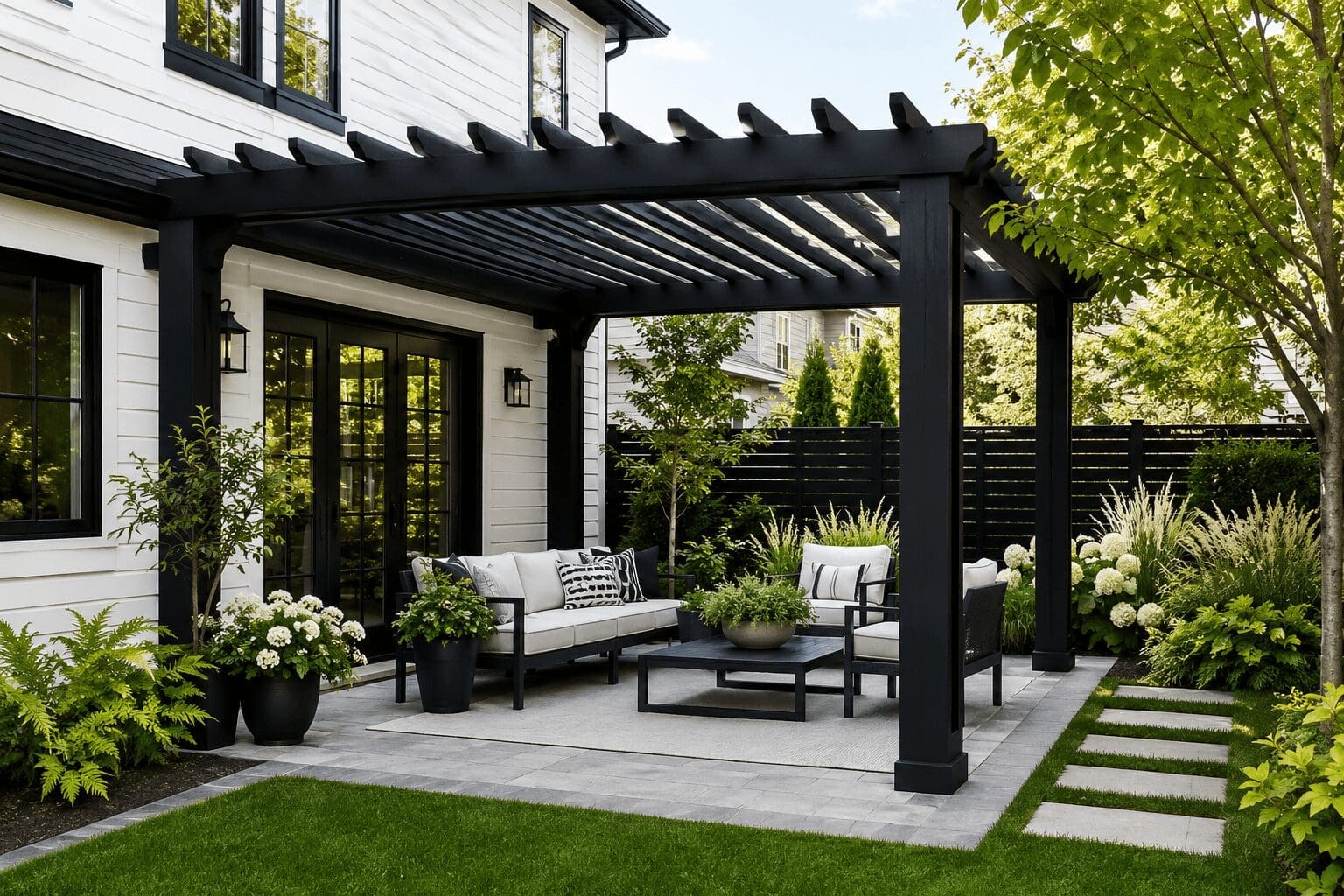
Pergolas: Blending Comfort and Design (And 26 Ideas to Back it Up!)
Key Takeaways:
- If you want to enjoy your outdoor space more comfortably, add a pergola.
- There are different material options to choose from, such as aluminum or fiberglass.
- The design you choose should match your purpose, like lounging or dining in the space.
- Efficient planning before installing a pergola is essential to avoid costly mistakes.
- A professional installation can help you ensure efficient results in the long run.
- Consider all the building codes and permits before getting started with the project.
- Different special elements like lighting or plants can make the space appear even more beautiful.
Introduction:
What does the ideal outdoor space look like for you? Most people do not want harsh sunlight and may not prefer a completely shaded space either. The ideal outdoor space will be somewhere in the middle, where you can enjoy light and air and still have the desired shade for optimal comfort.
If you have a similar vision, a pergola will be a great choice for you. This can help elevate a plain patch or patio and transform it into a functional space for relaxing, hosting guests, or reading your favorite books in peace. Pergolas do not directly shift the focus from the landscape. Instead, their open structure has low visual impact in the space.
What Does a Pergola Help With?
A pergola is a freestanding outdoor structure that was first seen in ancient Egypt. This outdoor garden structure has vertical posts that support the open roof lattice. This is perfect if you want to ensure shaded pathways, seating areas, vertical gardens, and more. They can boost the overall aesthetics of your space. Moreover, they also act as an extension of your home when placed strategically.
Why is a Pergola Installed?
A pergola helps block the sun’s rays and ensures gentle light in your space. The purpose of the pergola is not to block sunlight but to make this space feel more comfortable with gentler light. This makes the space feel more pleasant, as it is enclosed yet open. So, it feels quieter and more intimate, as you can experience the freshness of the yard while creating a protected space. The pergolas are perfect for dining spaces, outdoor kitchens, and more.
These pergolas are one of the most crucial elements in your landscape design. You can use it to boost the overall style quotient in the space. For instance, if your overall landscape design is more traditional, the pergola can reflect it. But if you want a space that feels practical and modern, the pergola should also have such an appearance.
You can install the pergola over a hot tub and create a private, rejuvenating space. You can also use it to set up your private office space where you can work comfortably while enjoying the weather. If you have installed swings or hammocks in the outdoor space, a pergola will be the most versatile addition on top.
What are the Preferred Pergola Materials?
The beauty and durability of a pergola depend on its material. Here are a few preferred and prevalent options.
Wooden Pergolas:
Wood is the most convenient material to work with. Cutting, shaping, and installing wooden structures is easier. The most impressive part of working with wood is its adaptability. You can paint or stain the surface. Wood is ideal for traditional pergolas due to its color and pattern.
Despite being a popular material, wooden pergolas are less preferred. The material is comparatively costly and requires high maintenance. Therefore, invest in it if you can pay attention to its maintenance.
Vinyl Pergolas:
A low-cost, low-maintenance pergola material option is vinyl. It might be cheaper, but it is less attractive and durable than other materials. The only reason to invest in these pergolas is short-term usage.
Vinyl pergolas are available in a few colors, like white and light neutrals. These pergolas are perfect if you need a low-cost solution for your space.
Aluminum Pergolas:
One of the drawbacks of wooden pergolas is their durability. Weather exposure can deteriorate the condition. On the other hand, metallic material can withstand these situations. For instance, they may bear heat, cold, and even rain (if coated appropriately).
Aluminum pergolas are an exceptional option for your lawn, backyard, patio, porch, and front. They are lightweight and can be easily molded into a desired shape. Therefore, people who need detailed pergolas opt for aluminum frames. Moreover, the material is low-maintenance compared to wood. Therefore, you must try it.
Fiberglass Pergolas:
An ideal option for a traditional and modern landscape is a fiberglass pergola. Fiberglass, with its smooth and polished surface, looks better than the roughly textured wood. People prefer wood because they can paint it conveniently. Similarly, they can also paint fiberglass structures.
Fiberglass is also a low-maintenance, highly durable material. Its durability allows you to position the post further away and create a stable structure. This way, posts do not obstruct the view of the landscape.
Natural Alternatives:
Pergolas need not be made of only these materials. People can try natural alternatives, too. For instance, building posts with bamboo for the rafters and beams is an excellent idea. Brick is also a suitable material for building sturdier pergola structures. Or, if you want to explore the luxurious side of the design, you can create a glass pergola. Along with all these, steel pergolas are also an incredible option.
How Can You Achieve the Perfect Pergola?
When building a pergola, there are several steps involved. Even when you choose a kit pergola, the installation process will be more complicated in real life. Occasionally, you may require assistance with underground concrete footings for every post. These posts should also be placed vertically seamlessly to avoid any mistakes. Thus, instead of trying to install the pergola yourself, you must contact experienced professionals who also understand the process. The right team can provide you with the services at cost-effective prices.
Is a Permit Necessary for Pergola Installation?
Permit requirements depend on your location. In some areas, a permit is essential, while in others, it may not be needed. For a larger pergola, you may need permits. Moreover, if there are weather conditions, like snow or wind, permits may be required for your space.
26 Pergola Ideas to Transform Landscapes and Outdoors:
Here are some stunning pergola ideas for landscapes and outdoors.
1. Integrating Indoors and Outdoors:
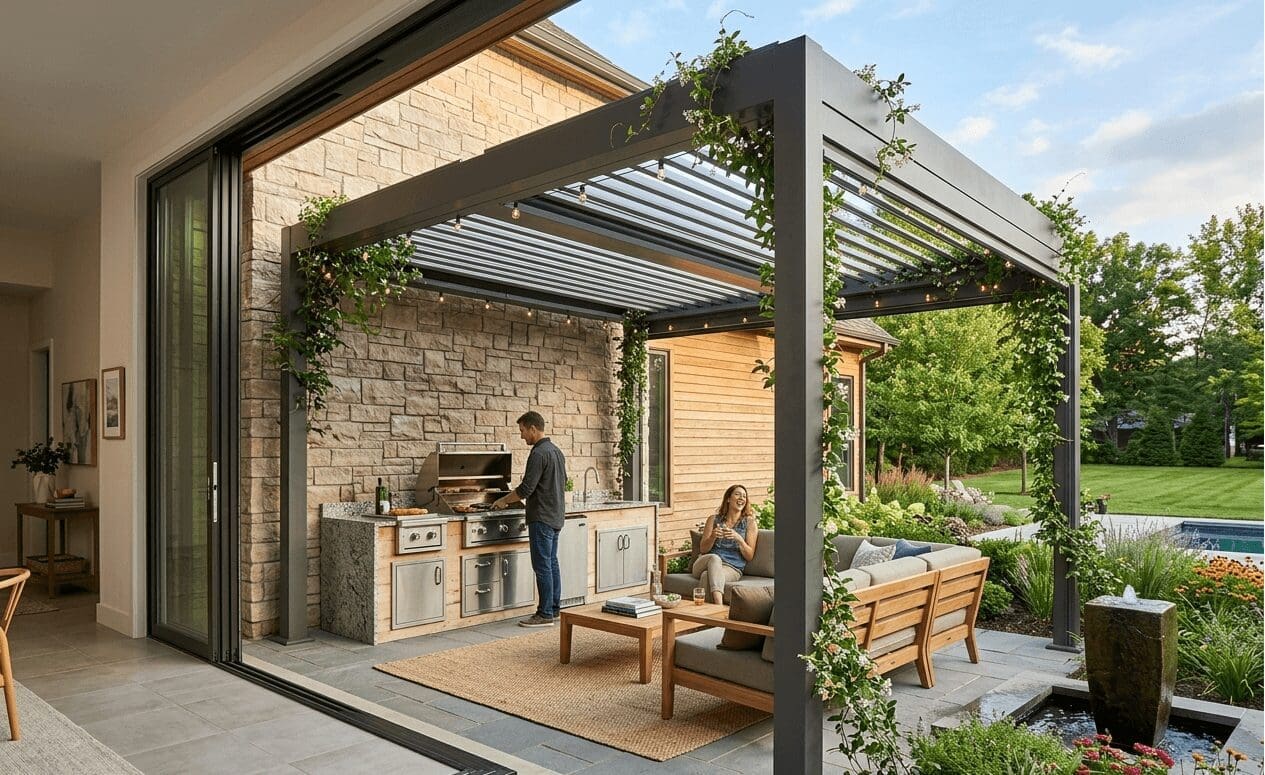
Pergolas can easily blur the line between outdoors and indoors. These small shades can accommodate indoor elements and promote outdoor living. Families can choose an outdoor kitchen, water feature, seating area, and other features for the pergola to enjoy open-air living.
For this, they can ask architects for suitable materials, designs, and shapes of a pergola. Outdoor kitchens are often placed near walls; setting a corner pergola may make more sense in such cases. Using a metal-grade material works better here.
2. Graphic Pergolas for Color Balancing:
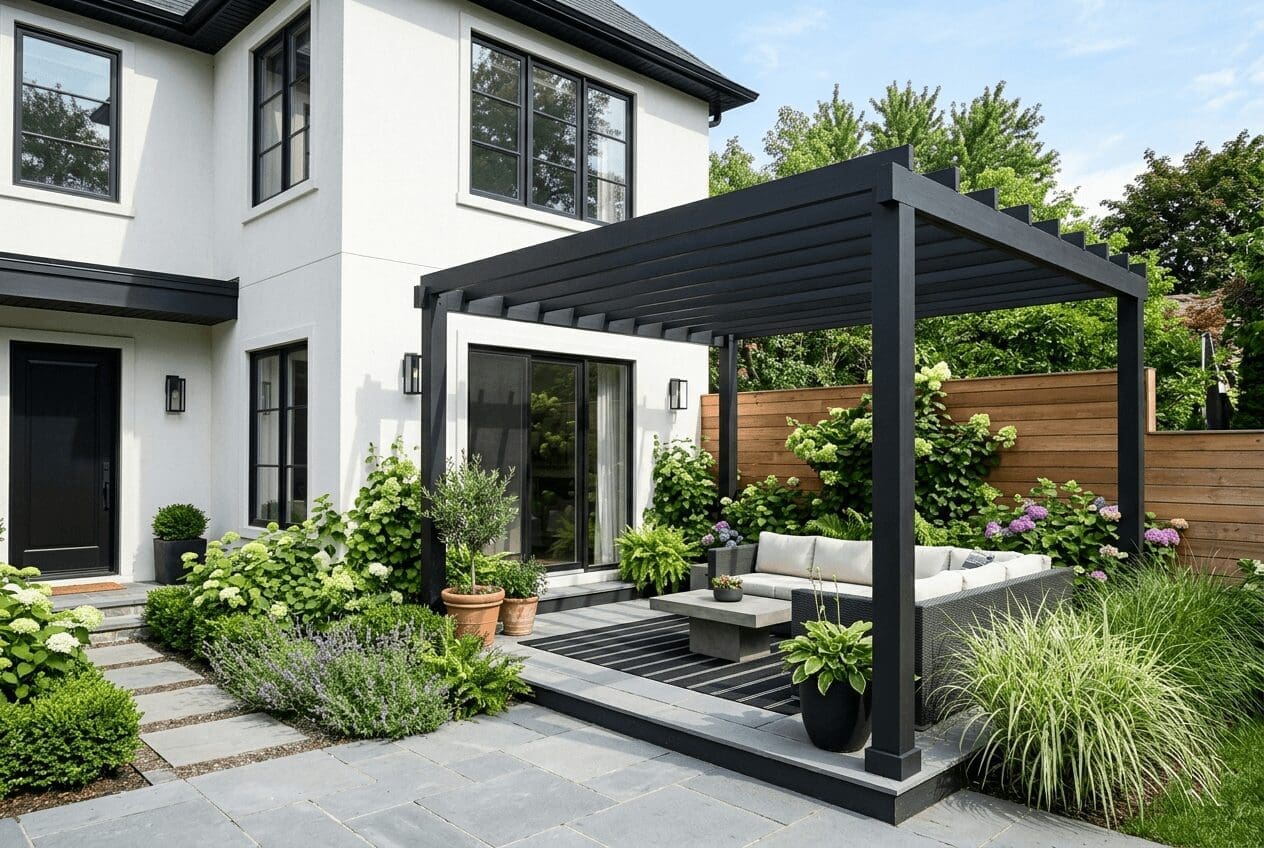
Modern landscapes and outdoor spaces can complement both contemporary and conventional pergolas equally well. However, considering the curb appeal of the structure can make a difference. A graphic pergola instead of traditional raw or stained wood can be a better idea.
Composite materials and outdoor-grade wood can be painted in the desired colors. A classic example is a black-and-white painted home structure with a painted pergola on the side, which complements the color and brings attention to the greenery.
3. Swing Seats on the Pergola:
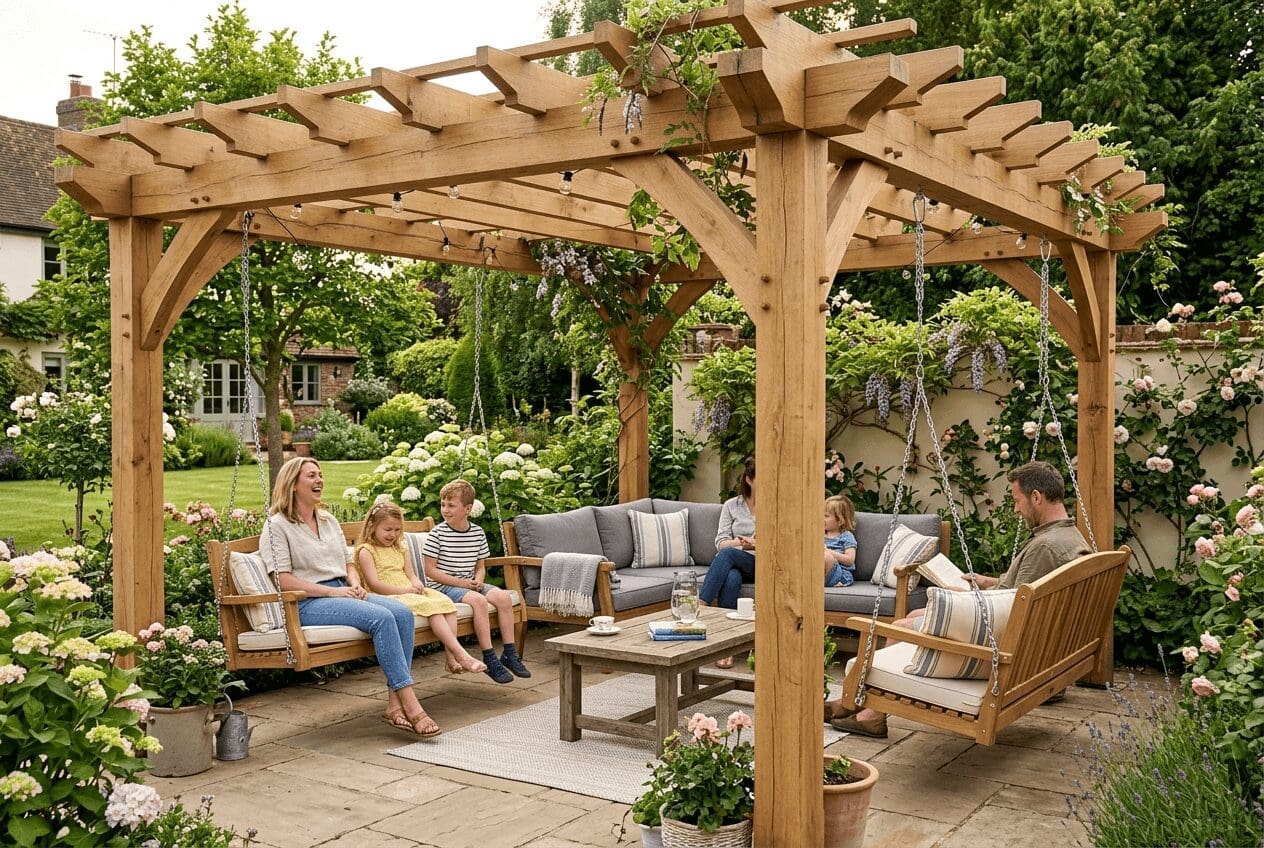
The most classic wooden arrangement in the landscape is a wooden pergola with hanging seats. The adults and kids are going to love it in every situation.
Place a center table, a fixed sofa (if needed), and three hanging seats on the sites. For this purpose, you may need a sturdy pergola made of high-quality wood and excellent architecture. Focusing on the structure’s durability and strength is crucial; the swings may snap, and they may injure people seated on them. Asking a professional to handle this part is better.
4. A Louvered Pergola for Customized Use:
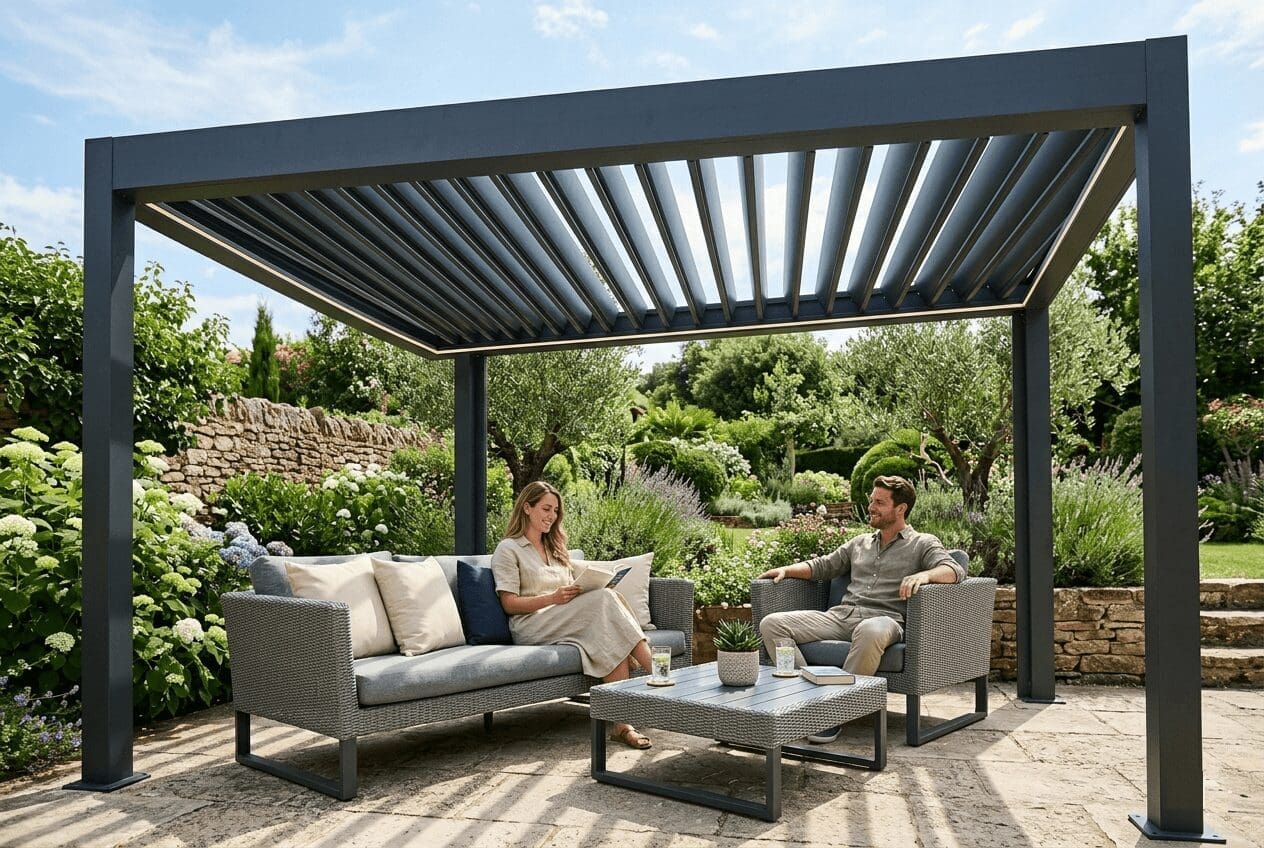
A modern pergola idea that can elevate outdoor living and add flexibility is a louvered pergola. Enjoying the space during the day, when the sun’s at its peak, can be challenging. The adjustable roof slats can let desired light and air pass through. The structure can be used for complete or partial shade for the day. At night, you can rotate the louvers and enhance ventilation.
5. A Woven Shade for Temperature Control:
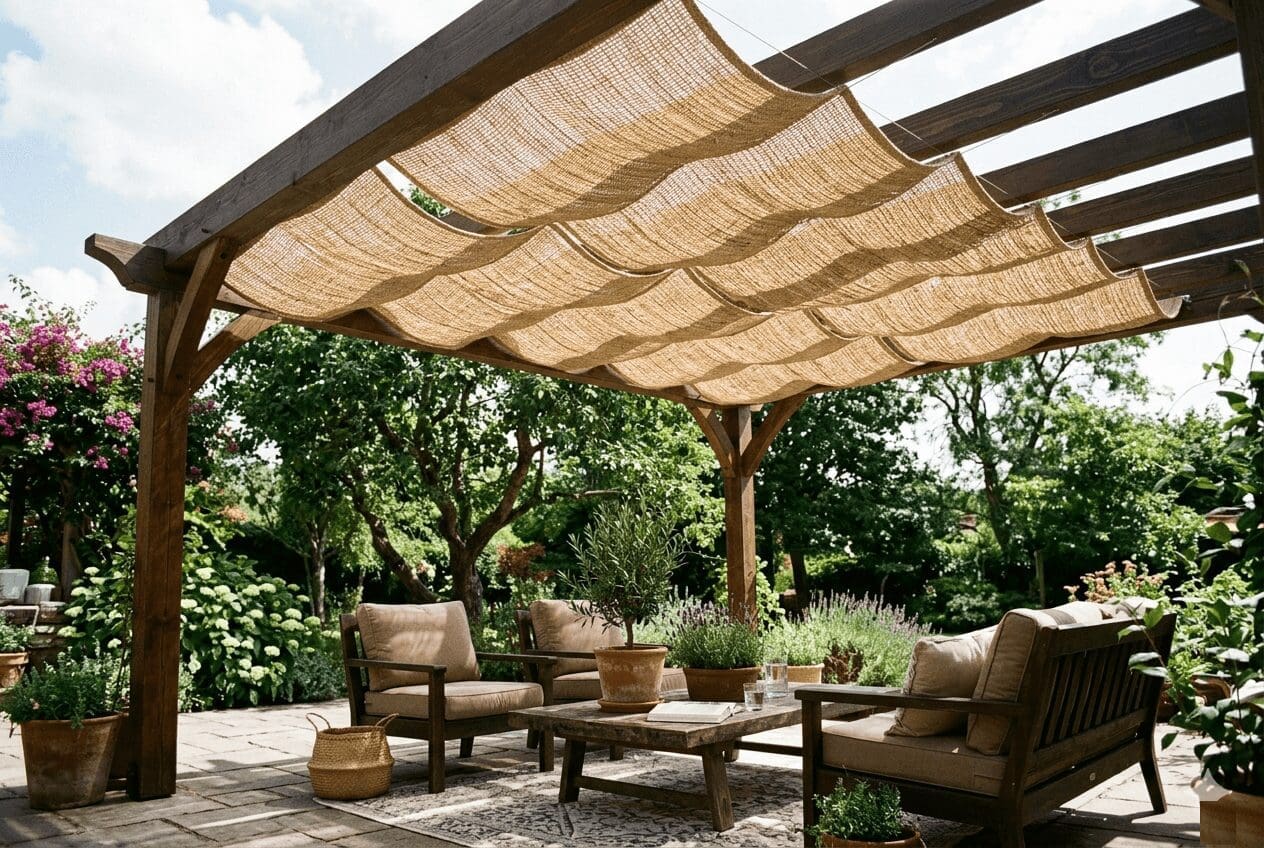
Outdoors, exposure to extreme sunlight can get hot as the day goes on. Using a shade over a pergola can help control the temperature. Pergolas with rafts add elegance to modern and conventional outdoor spaces. Adding woven sunshade material to the raft in a stylish manner to create a wavy pattern is an excellent idea. The pattern can filter light and control the temperature within.
6. Adding a Shade Curtain to a Cantilever Pergola:
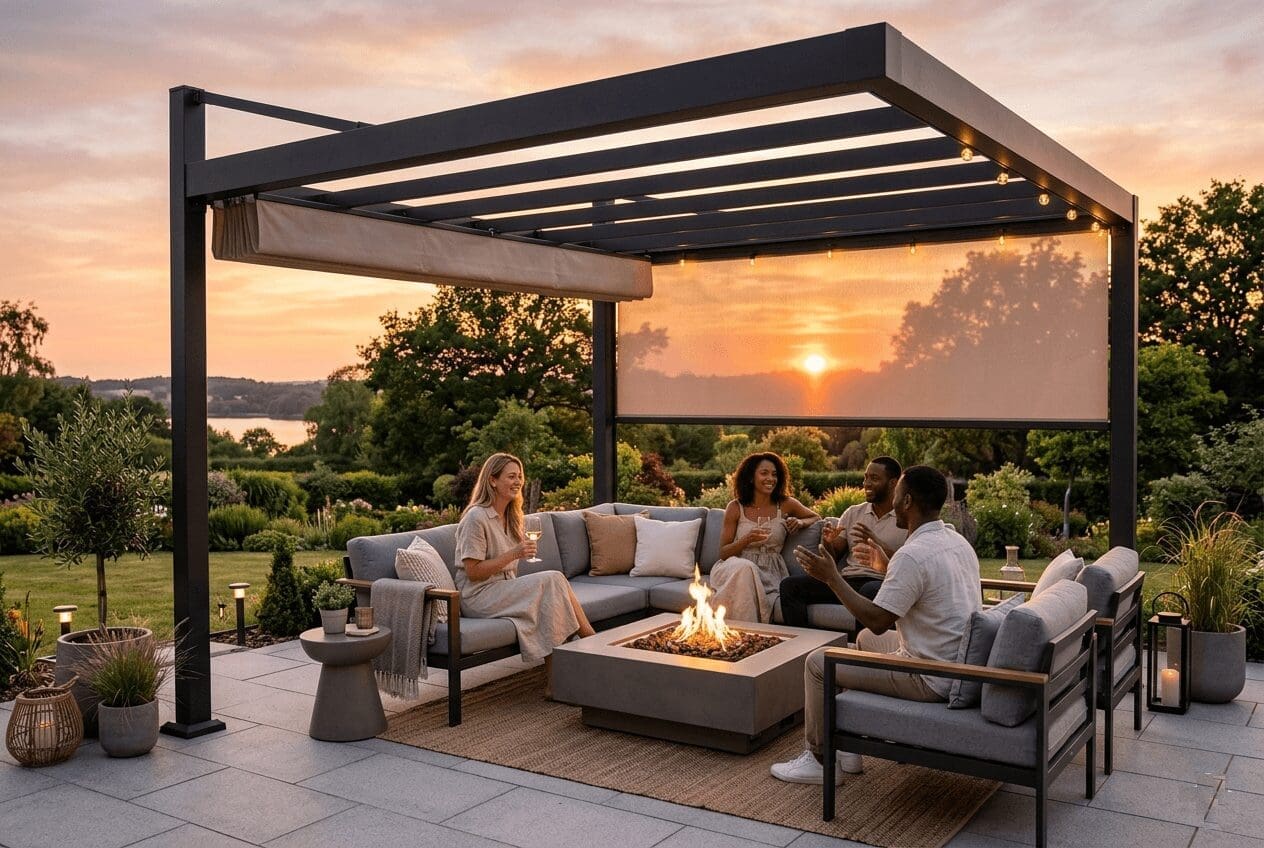
Another great idea is a cantilever pergola that has at most two posts and a few rafters. The pergola is designed to be on the opposite side of the sun, enabling people to enjoy sunsets and daytime. The curtain can limit the sunlight during the evening, creating a more comfortable outdoor space.
Installing contemporary furniture and decor makes it more appealing. Cantilever pergolas are perfect for outdoor living spaces with a center fire pit. It lets you operate the fire pit without worrying about smoke and flames damaging the pergola.
7. Upgrading the Forgotten Corner:
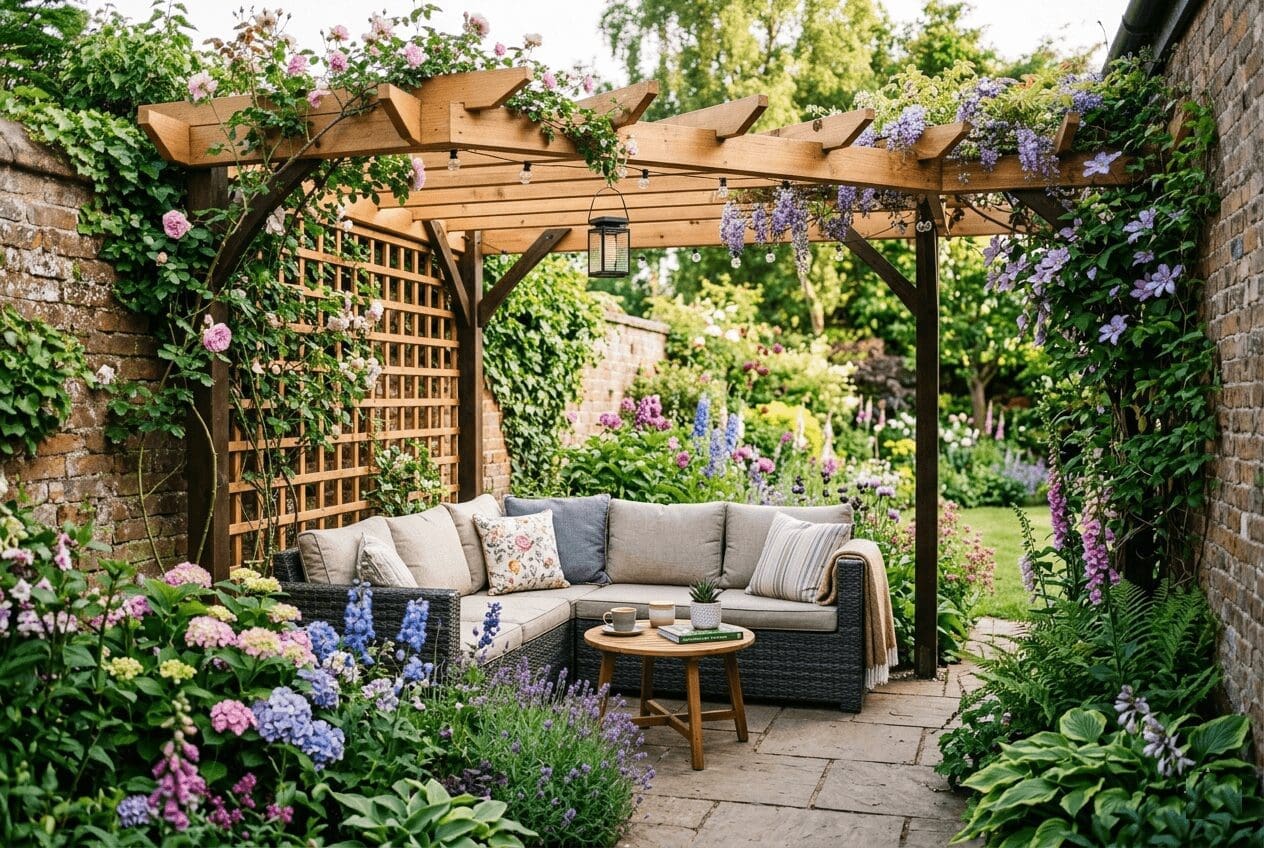
You can freely add a pergola to the garden, whether it’s big or small. You can think of utilizing the forgotten corner. A metal or wooden L-shaped or triangle-shaped structure can create a perfect pergola corner. The corner structure won’t even block the garden view, and you can sit in the space, looking at your tiny garden blooming positively.
8. A Pergola with Natural Escape:
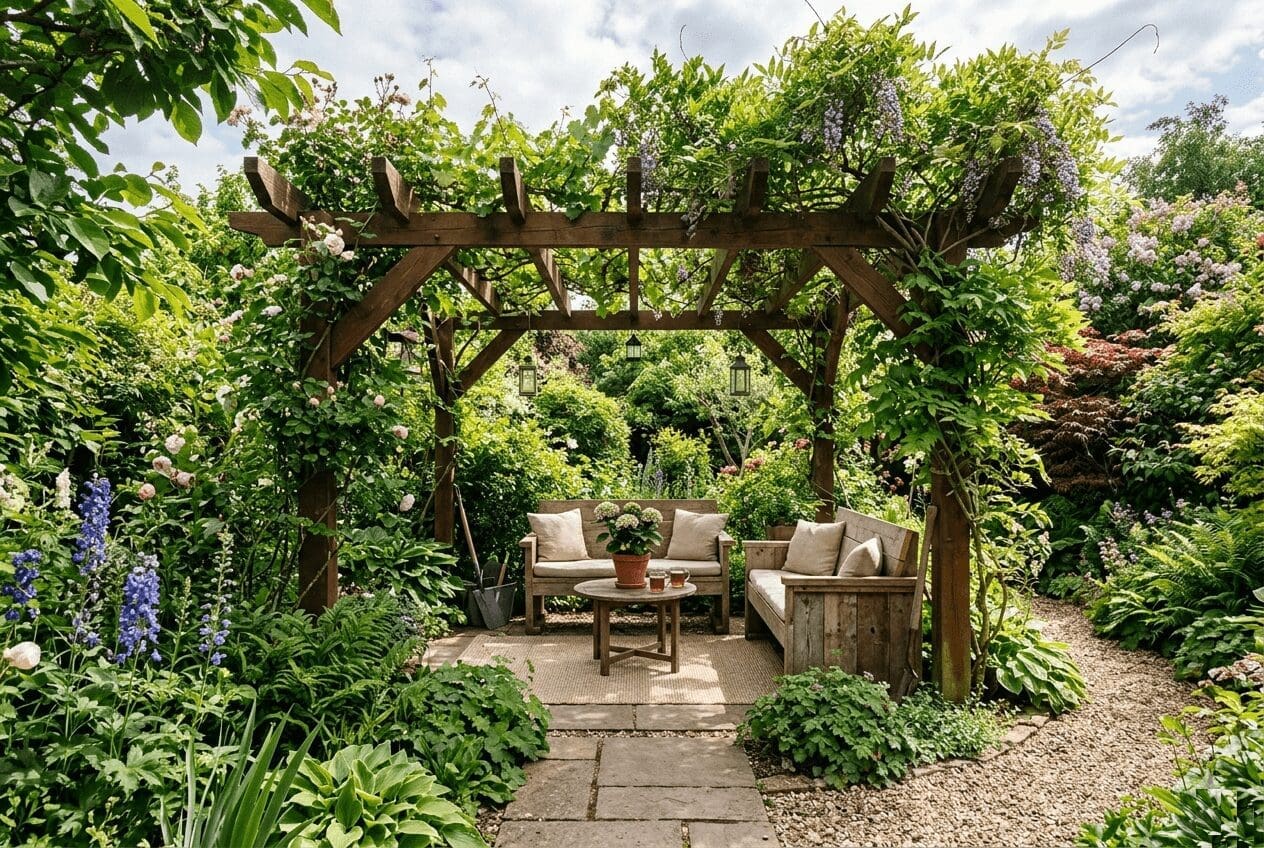
Carving a pergola in the middle of the garden escape can be breathtaking. The wooden structure with rafters, beams, and posts can allow climbing plants to climb up and create a green pergola. The space naturally filters sunlight and air for an enhanced experience. You can even use plants and trees for privacy and enjoy your intimate moments in the open.
9. Traditional Wood Pergola with a Fire Pit:
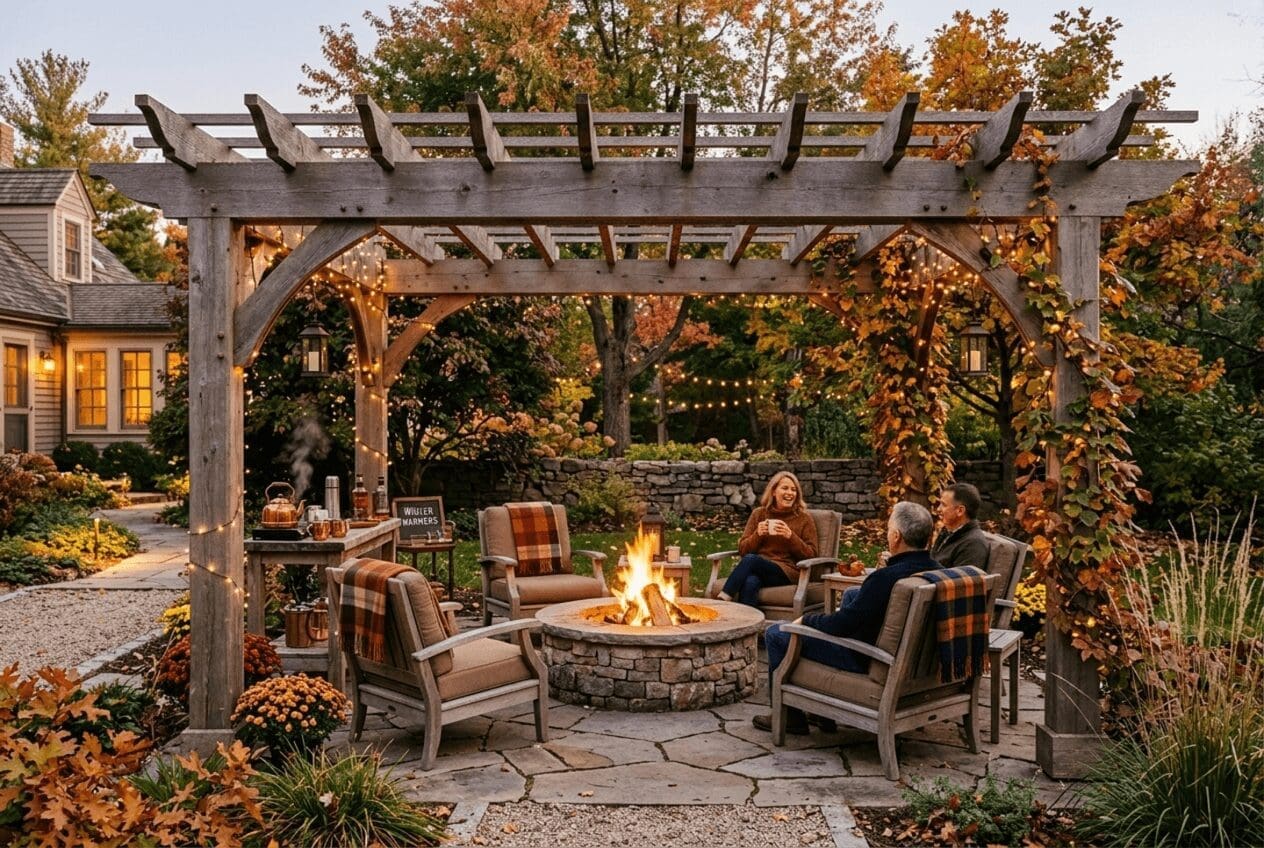
A classic wooden pergola is perfect for traditional and modern landscapes. These wooden pergolas with rafters protruding from the beams replicate ancient designs, giving a royal essence to the structure.
Adding a few seats around the fire pit makes these pergolas more compelling. You can also place a beverage station nearby to create a cozier space for winter.
10. Integrating the Hawaiian Style:
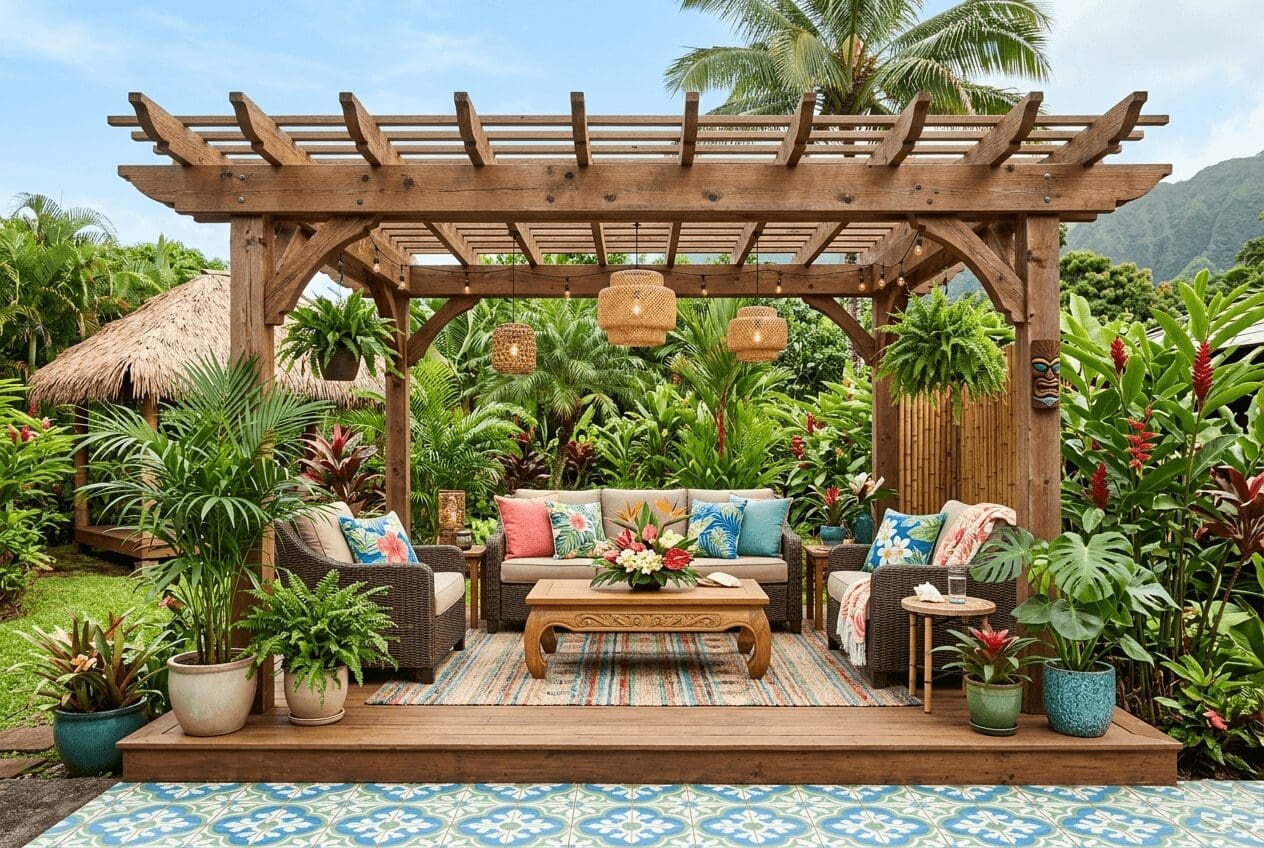
Furniture, structure, and decor can carry authentic vibes in a pergola. You can simply choose a Hawaiian-style pergola for your outdoor space. Picking decor elements can be easier, but what can make the difference is the floor. You can attach it to the patio or build it on a deck. Using patterned tiles for the floor prevents the pergola from being boring. These functional and visual features complement the space and elevate the vibes.
11. Go with Bold Design Statements:
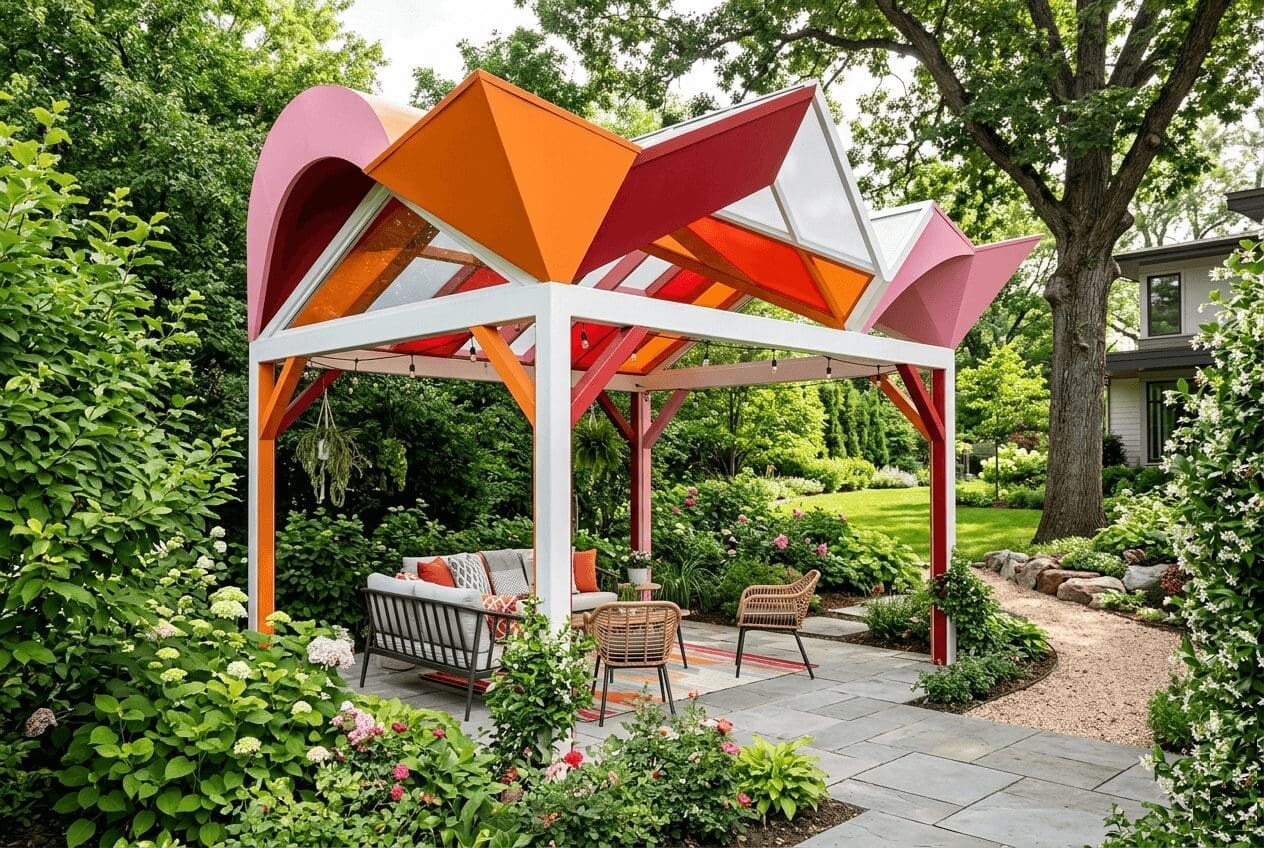
Bold pergolas are groundbreaking. Experimenting with the designs, ignoring the standard options, can be a smart move. You can choose the pergola roof to be unusually shaped. Along with this, pop colors can make it stand out in the green environment. For instance, using tangerine, rouge, pink, and white in balance can create bold pergolas.
12. The Outdoor Room:
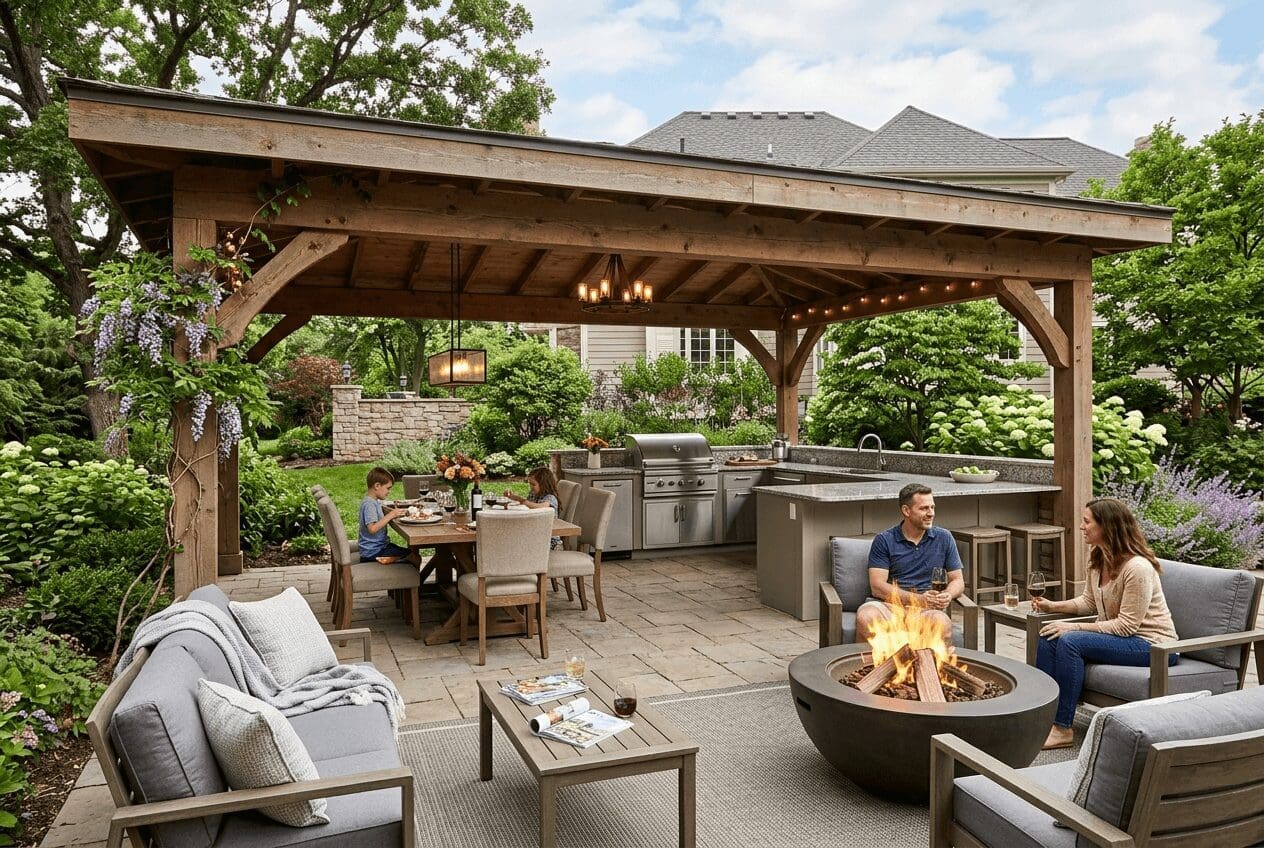
Pergolas can be stylish, practical, and meaningful spaces in the landscape with year-round use. People can go for a completely covered pergola with sides open. A large outdoor room with a dining area, lounging area, kitchen, and fire pit is an exceptional idea. It can be your full-time outdoor room, irrespective of the weather.
13. Modern Wooden Pergola Near the Pool Deck:
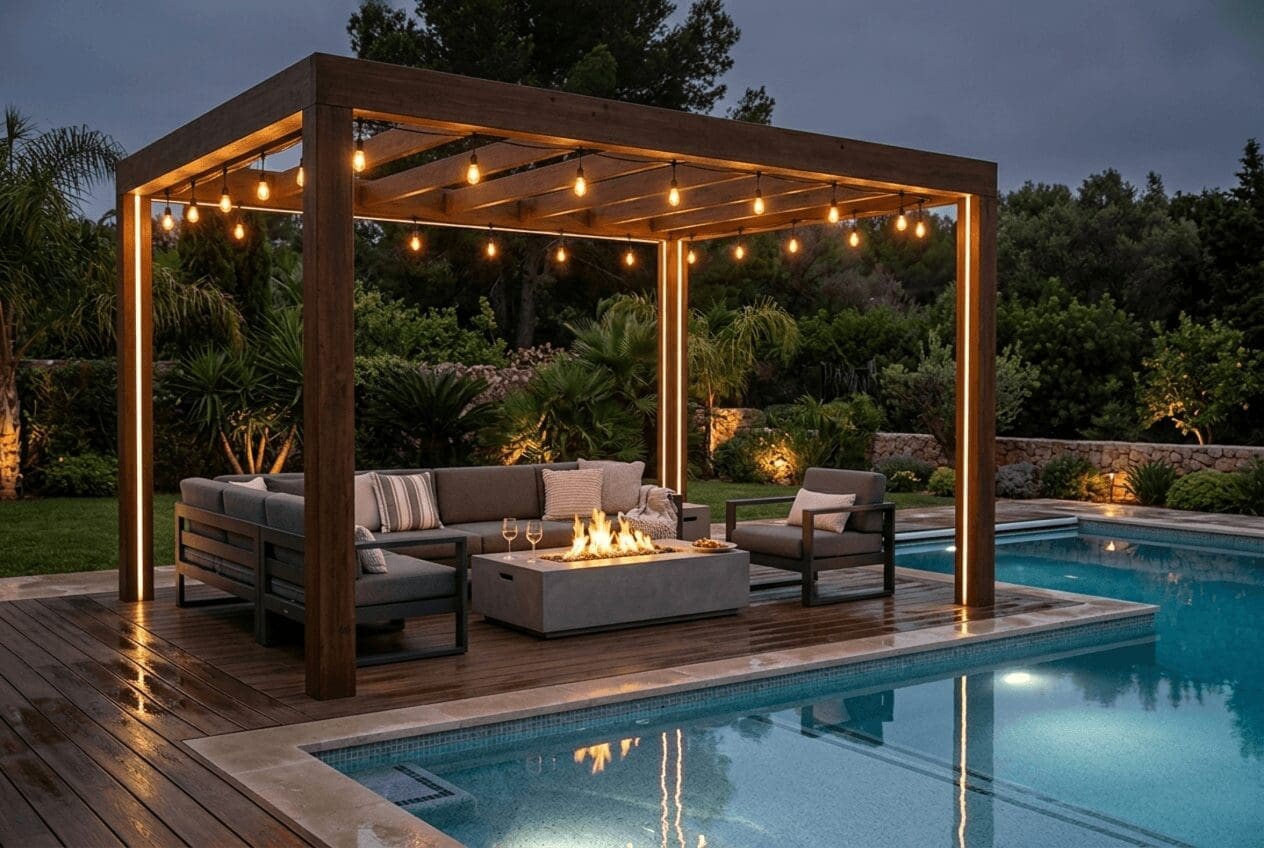
A multi-functional approach to the pool area would significantly enhance its overall experience. A modern, classic wooden pergola near the pool for lounging significantly benefits the landscape value. Complement this sleek pergola with contemporary patio furniture.
String or fairy lights across the beams, or LED strips on the posts, add a modern touch. A fire pit or table-top fire feature can make the space more practical.
14. Imitating the Architecture:
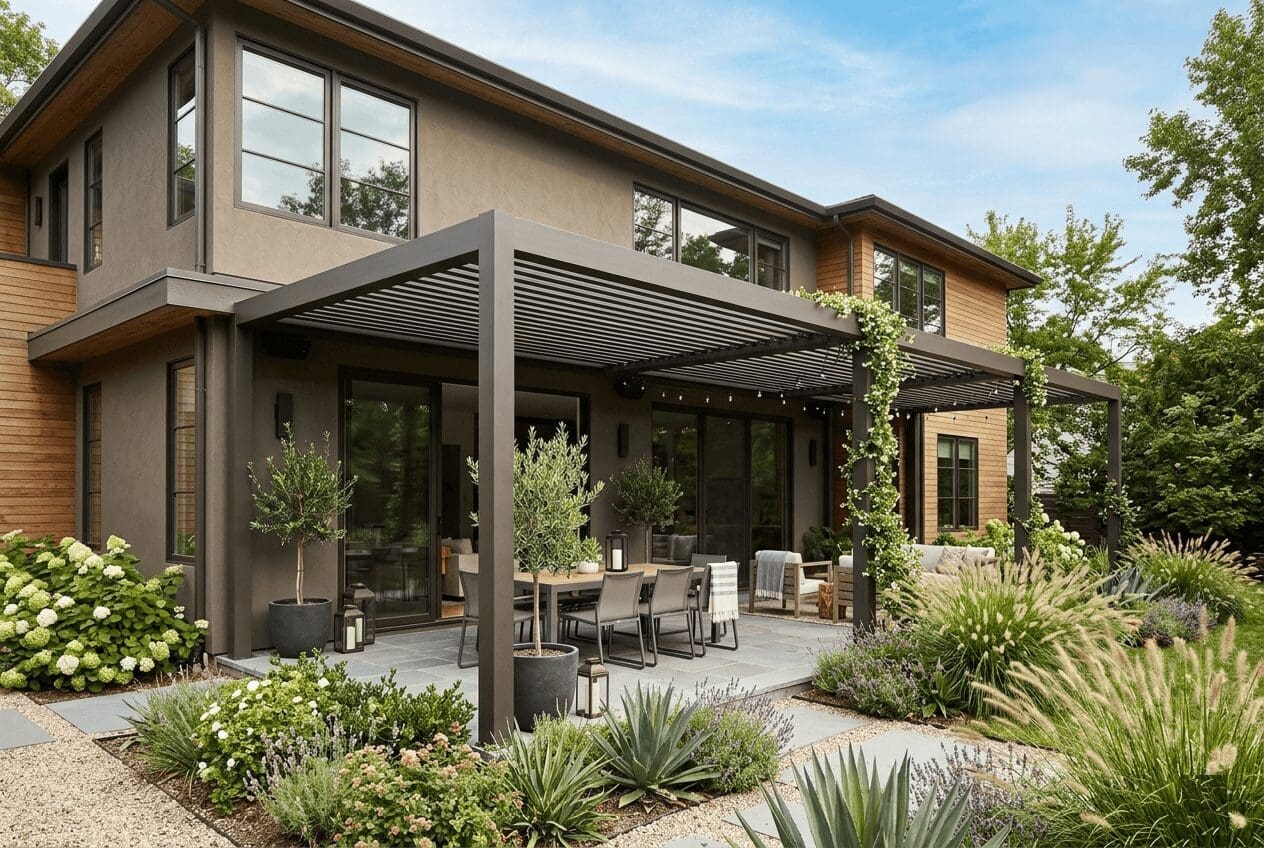
A pergola design that doesn’t outperform the architecture, and flows with the curb appeal instead. A metal pergola painted with the same color as the house’s facade and designed according to it can be more stunning than expected. Such an approach makes the pergola cleanly integrate with the outdoors and the architecture. Material selection and design play a crucial role in this pergola idea. Experts can even take care of the landscape design and balance the appeal.
15. A Pool House Pergola:
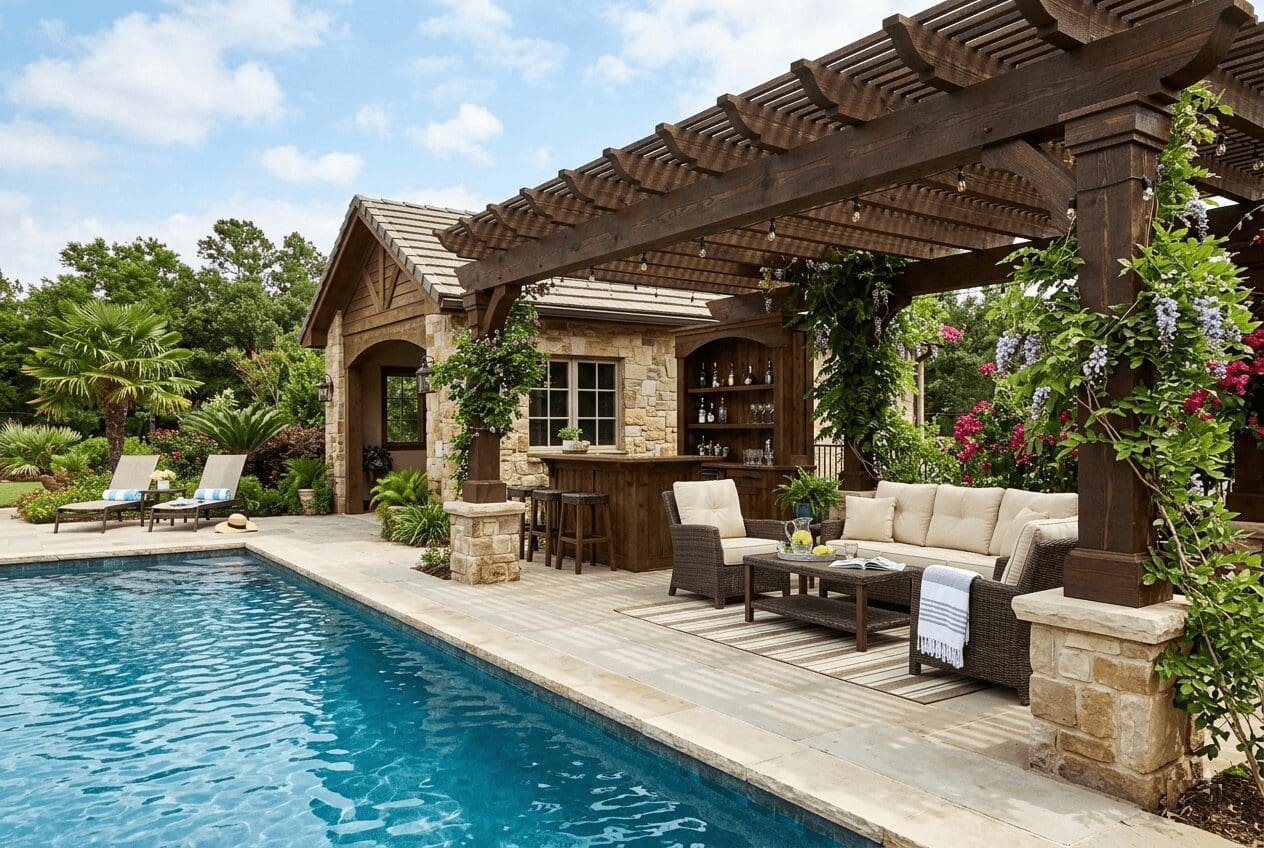
Pergolas near the pool deck and around are common. But there’s a way to add a unique element to these pergolas near the pool. Building a pool house pergola is an exceptional idea. An ornate outpost with elevated posts and a well-furnished interior is no less than a fantasy.
The space is perfect for shade after a fun pool session, relaxation when the kids are playing out, and for those evening beverage sessions when the weather’s more than dreamy.
16. Winterized Pergola for a Winter Landscape:
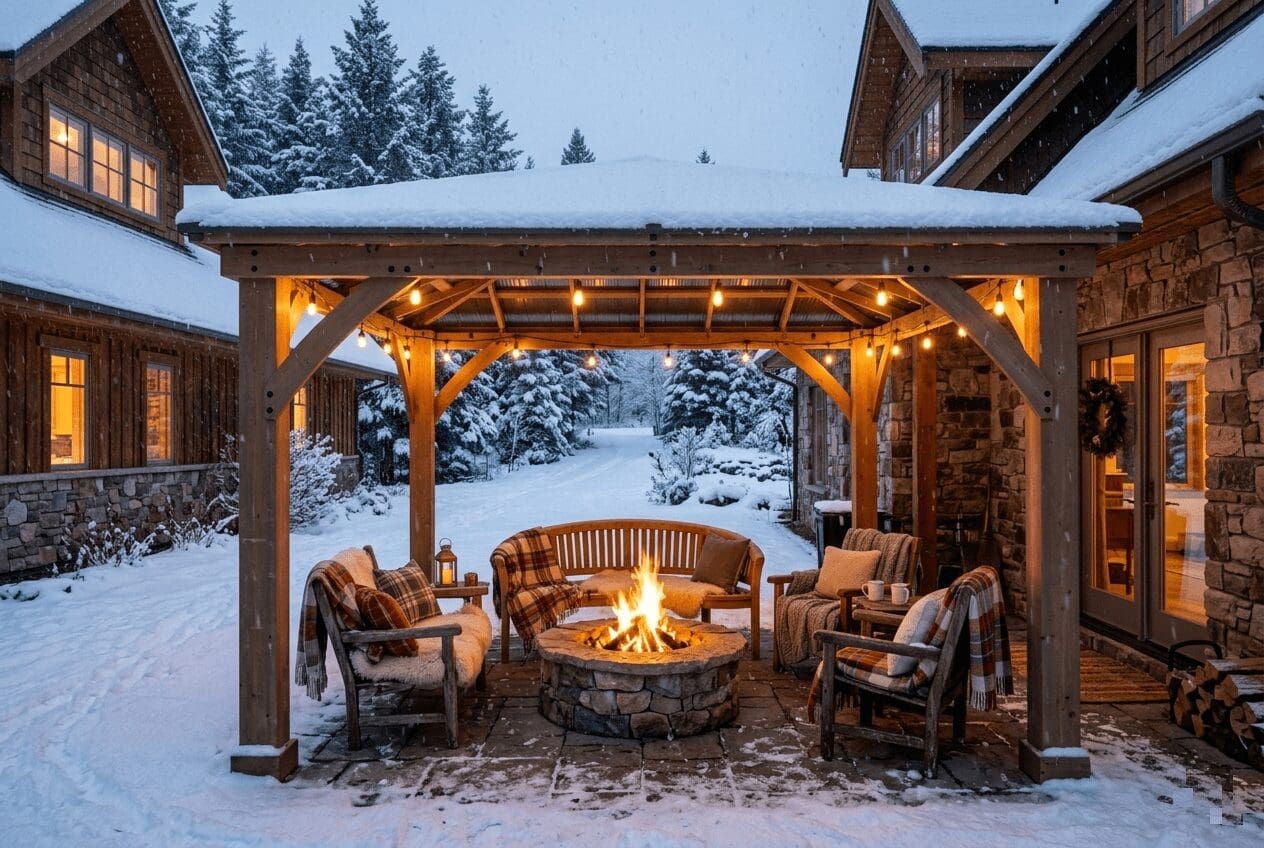
Snow can take away the outdoor time. But you can again restore them with a well-designed pergola for a winter escape. You can enjoy the outdoors when it snows without getting snowed. A pergola can be the shield that lets you relish soothing snowfall and stay protected.
A polycarbonate roof of this pergola can control snow from reaching you. The weatherproof material makes your winter outings more exciting. You can even add a fire pit to enhance the space’s coziness.
17. A Classic Modern Pergola:
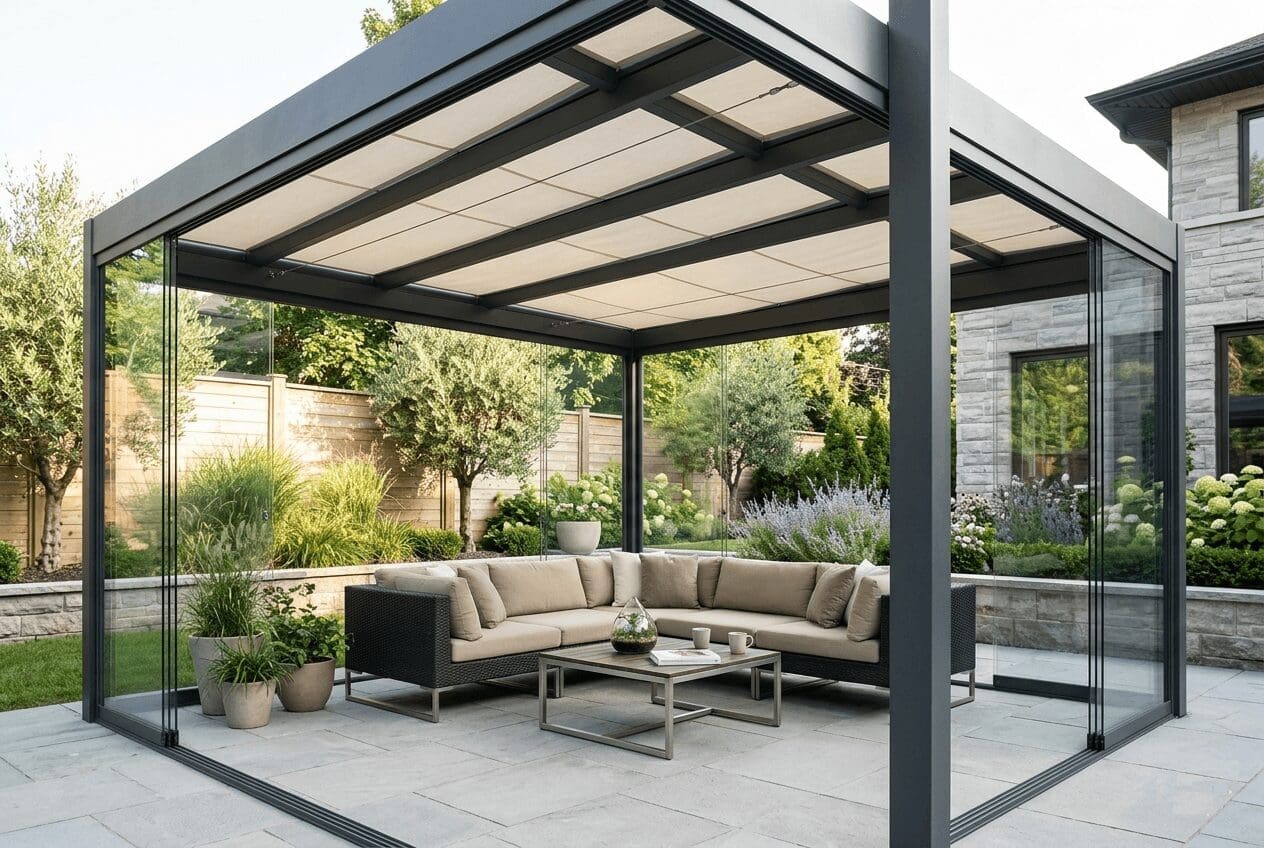
Not everyone is up for the conventional designs. Some expect the pergolas to be contemporary spaces with classic modern vibes. For such designs, choosing the right material is the key.
Powder-coated steel beams replacing the wooden ones and the use of wires for retractable shades instead of regular blinds can be defined.
Adding glass panels to the corners of the pergola to build a partially enclosed structure is an excellent idea. All these features create a stunning space with classic modern ambiance.
18. A Living Cedar Pergola:
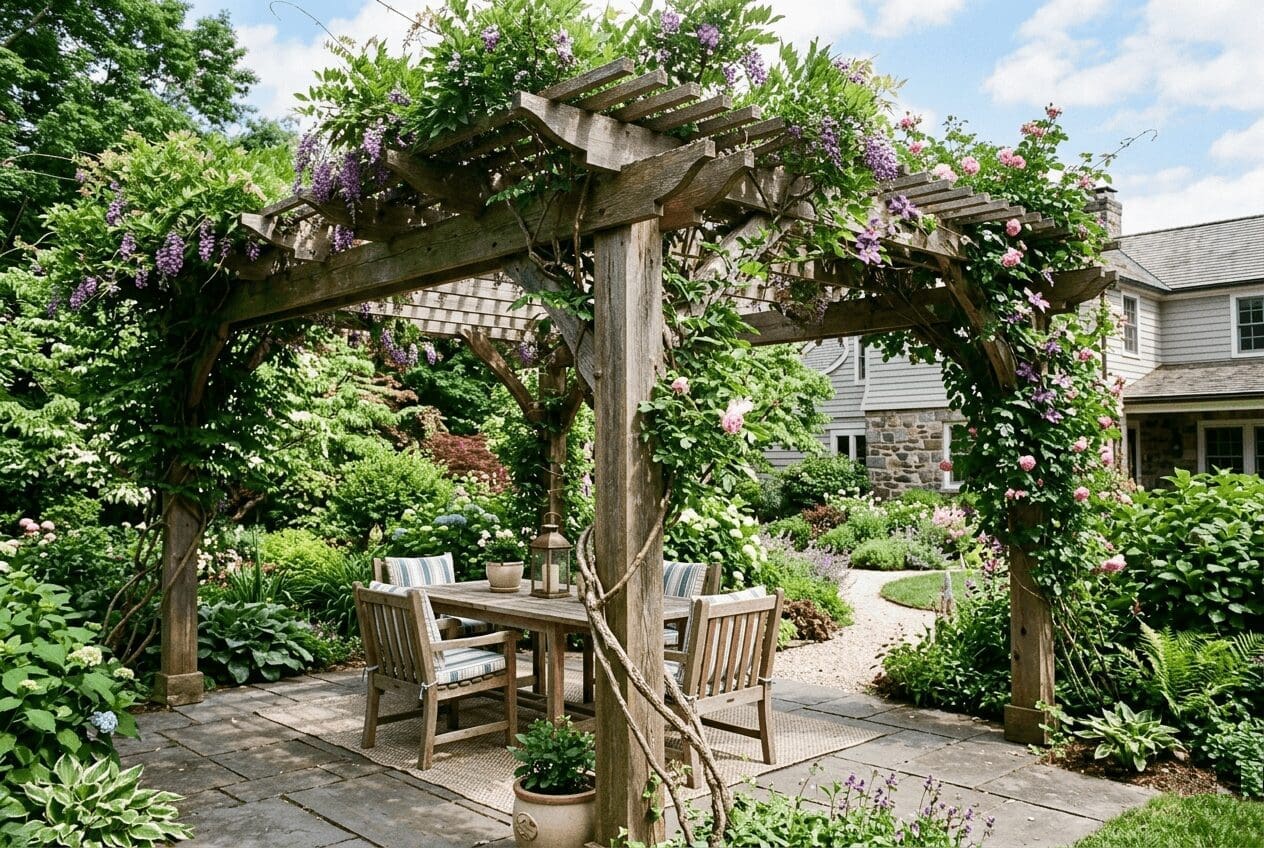
There are reasons people consider a pergola a living structure. Using cedar wood for the structure can be a brilliant idea. The wood ages well and withstands harsh conditions with minor care and attention. Cedar is naturally beautiful; therefore, painting or staining is not necessary. Applying a coat to prevent termite and pest attack can be ideal, though.
Adding climbing plants to the structure can create a living pergola that grows with time. So, consider these additions for a beautiful outdoor living space. These living cedar pergolas can easily complement the landscape design.
19. Mixing Pergola Materials for Blended Elegance:
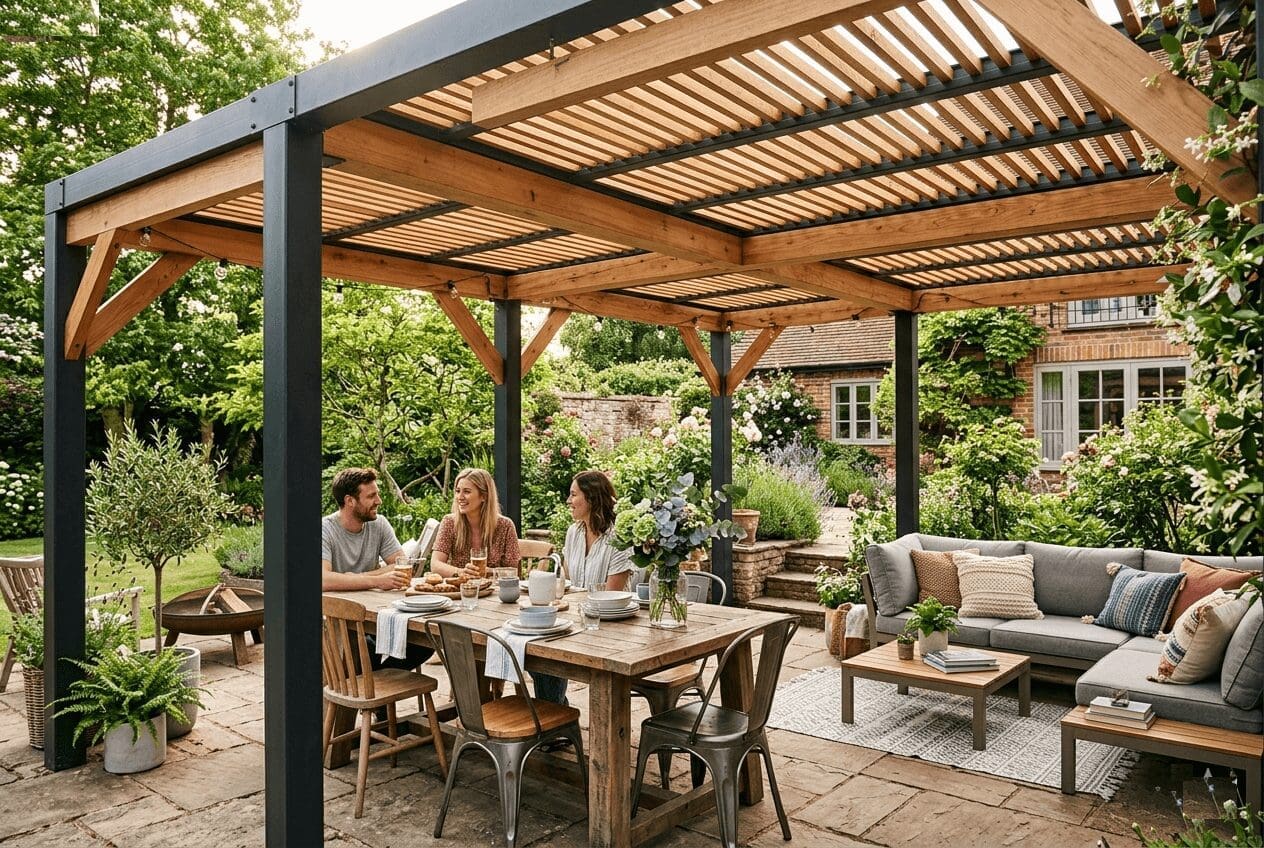
Pergolas can serve as a one-stop solution, your perfect space for lounging, dining, celebrating, etc. Since a space can serve multiple purposes at a time, why can’t it reflect mixed vibes? People do not necessarily need to pick one material; they can go for multiple.
Wooden pergolas are elegant, natural, and conventional but need high maintenance and care. On the other hand, metal pergolas (steel & aluminum) can be sturdy, low-maintenance, and durable. Architects can blend these two materials to create an authentic design and long-lasting structure.
20. Choosing a freestanding pergola for a quieter space:
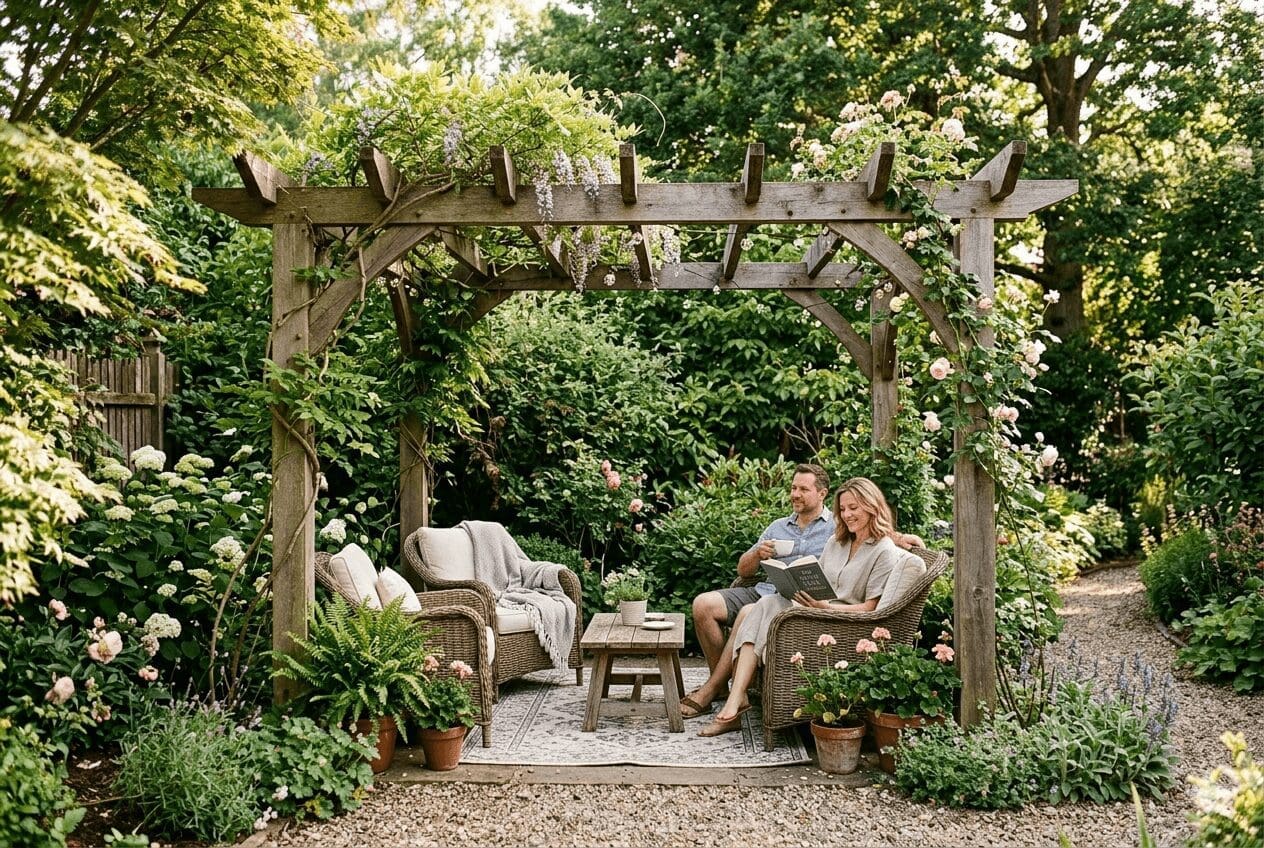
You can also invest in a simple yet convenient freestanding pergola for your landscape design. If you want a private, peaceful outdoor space where you can relax, read a book, or simply spend time with your loved ones, this design will be suitable for you. This style will help you relax exceptionally.
21. Pergola with a Rattan Ceiling:
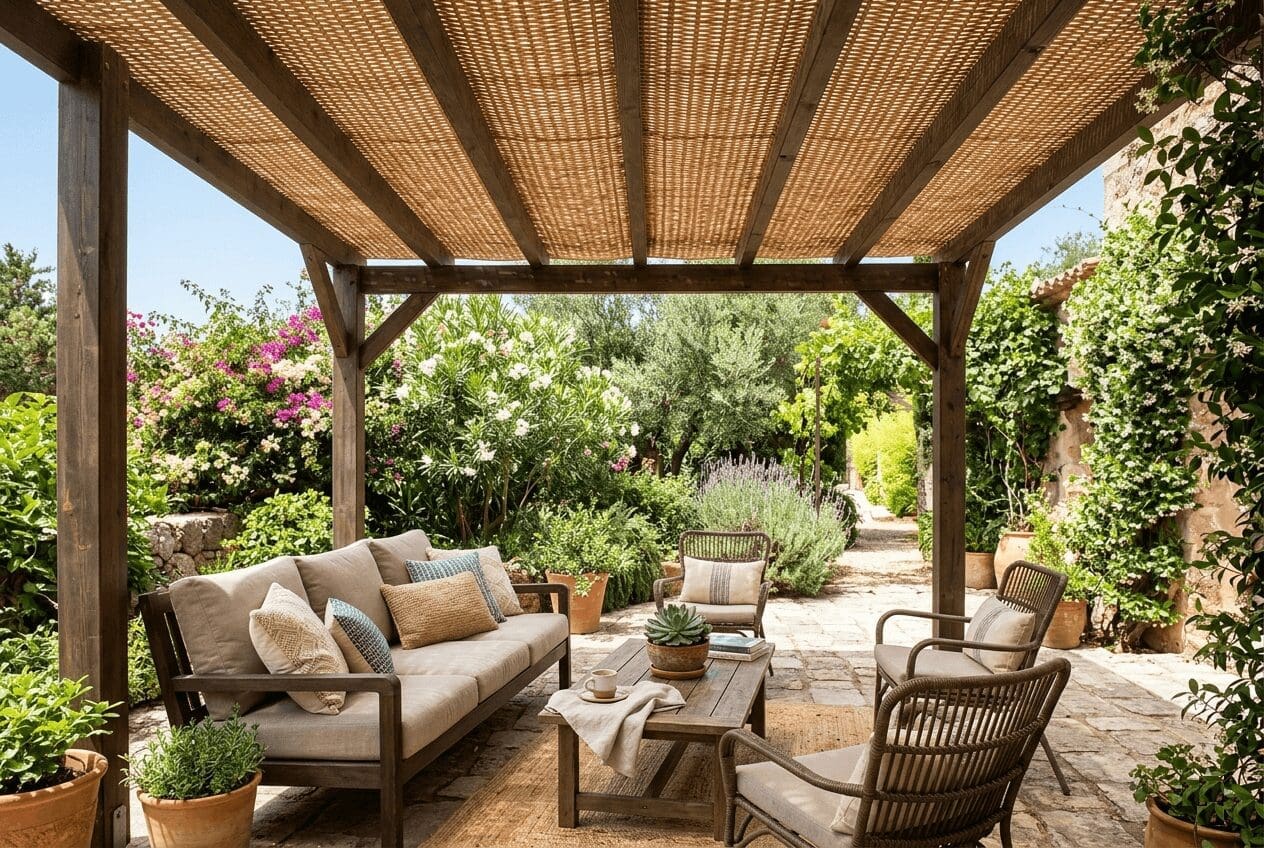
Sunshades, rafters, and louvers can be fancy elements in a pergola. If you wish to keep it classic and authentic, going for natural materials with outstanding characteristics is a great idea. Rattan is a natural material known for its incredible properties.
Rattan is lightweight and doesn’t put more pressure on the structure. It allows air to pass, creating satisfying ventilation. The rattan sheet also allows filtered light to pass through, increasing the comfort level in the pergola during the daytime.
22. A Roof Pergola:
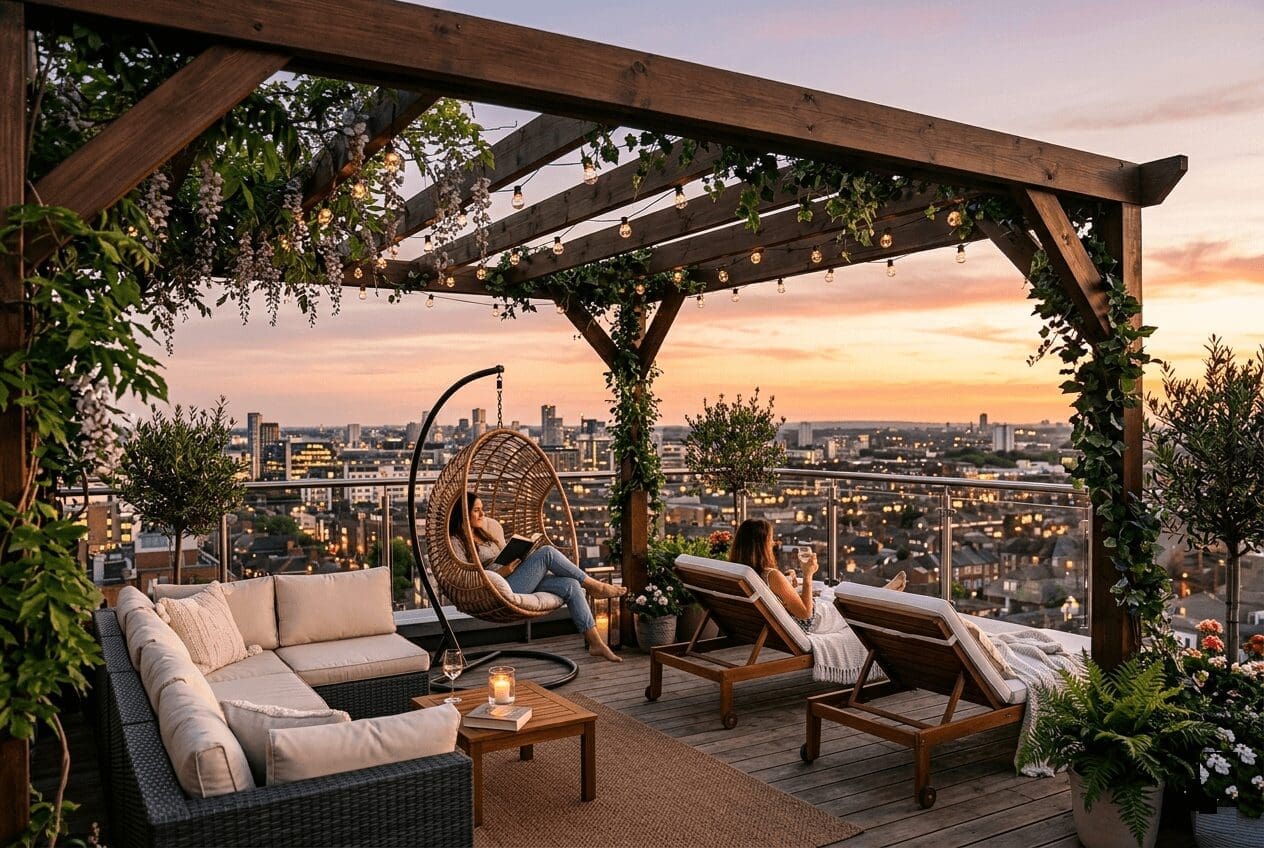
You do not necessarily need a pergola in the garden or yard. Occasionally, you can go for upper levels. Choosing the roof for the pergola can be an excellent idea. You can add lounge chairs, sectionals, and hanging chairs to the structure.
Roof pergolas are ideal when you do not have enough space on the ground levels. These structures provide a soothing area to enjoy sunsets, evenings, etc. Therefore, more people choose roof pergolas.
23. Front Wooden Pergola as a House Porch:
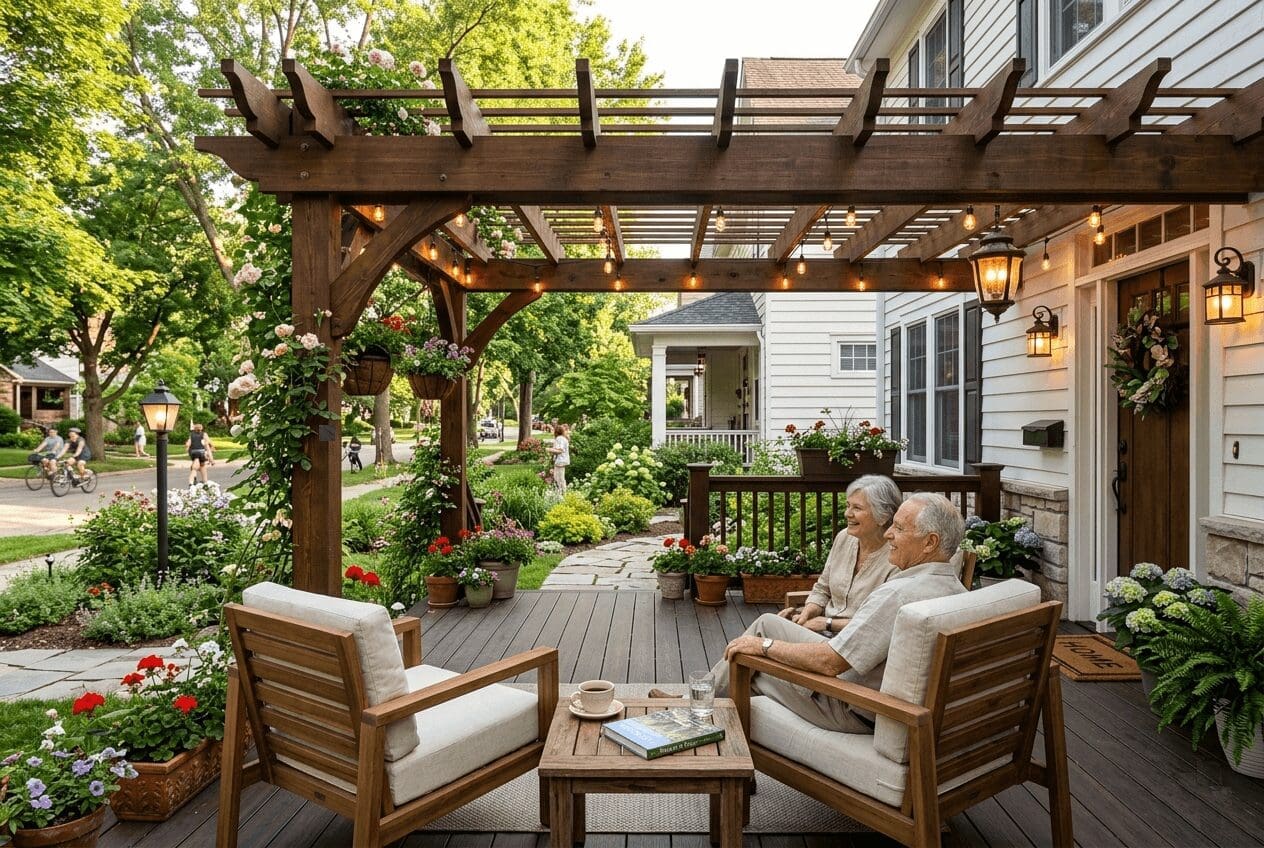
Sitting on the front porch, enjoying the view, and observing nature & people can be fun under a pergola. A classic wooden pergola with raised beams protruding from the central beam creates a jaw-dropping front. Contemporary chairs, tiny flower pots, and a coffee table can make this space more elegant.
Front porch pergolas can be a part of your house’s facade. It can elevate the curb appeal. Adorning the space with complementary elements during the day and night is crucial. Therefore, lights and lamps around the space are essential.
24. A Pergola with Ribbed Columns:
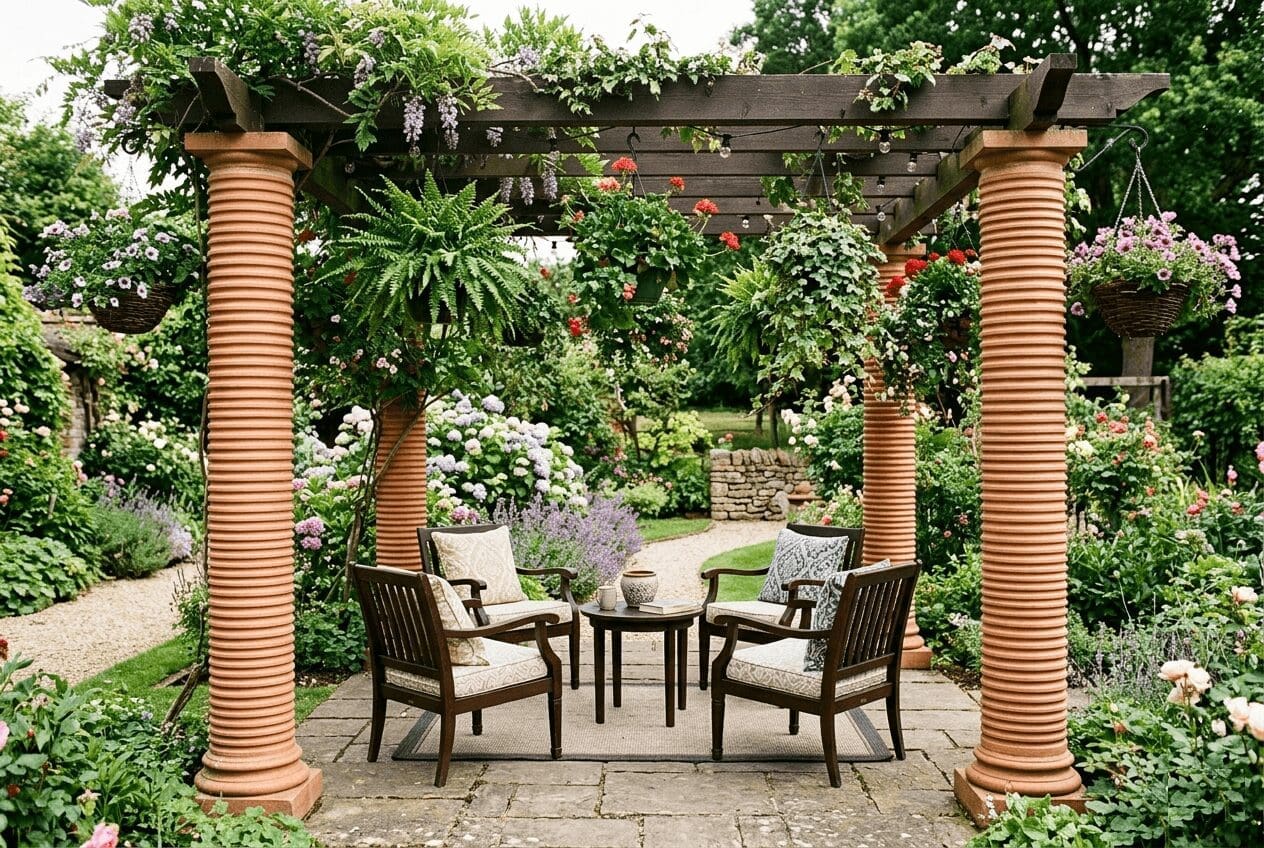
Another great idea is to design the pergola columns uniquely. Instead of those regular square and round posts, people can experiment and try distinct patterns. Pergola columns in a garden getaway can be natural and complementary.
One of the finest ideas is to go for ribbed columns. These colored columns may look stunning with a well-decorated roof, hanging plants, and the garden area. Therefore, people with unique choices try unusual shapes, designs, and patterns.
25. Experimenting with shade sail:
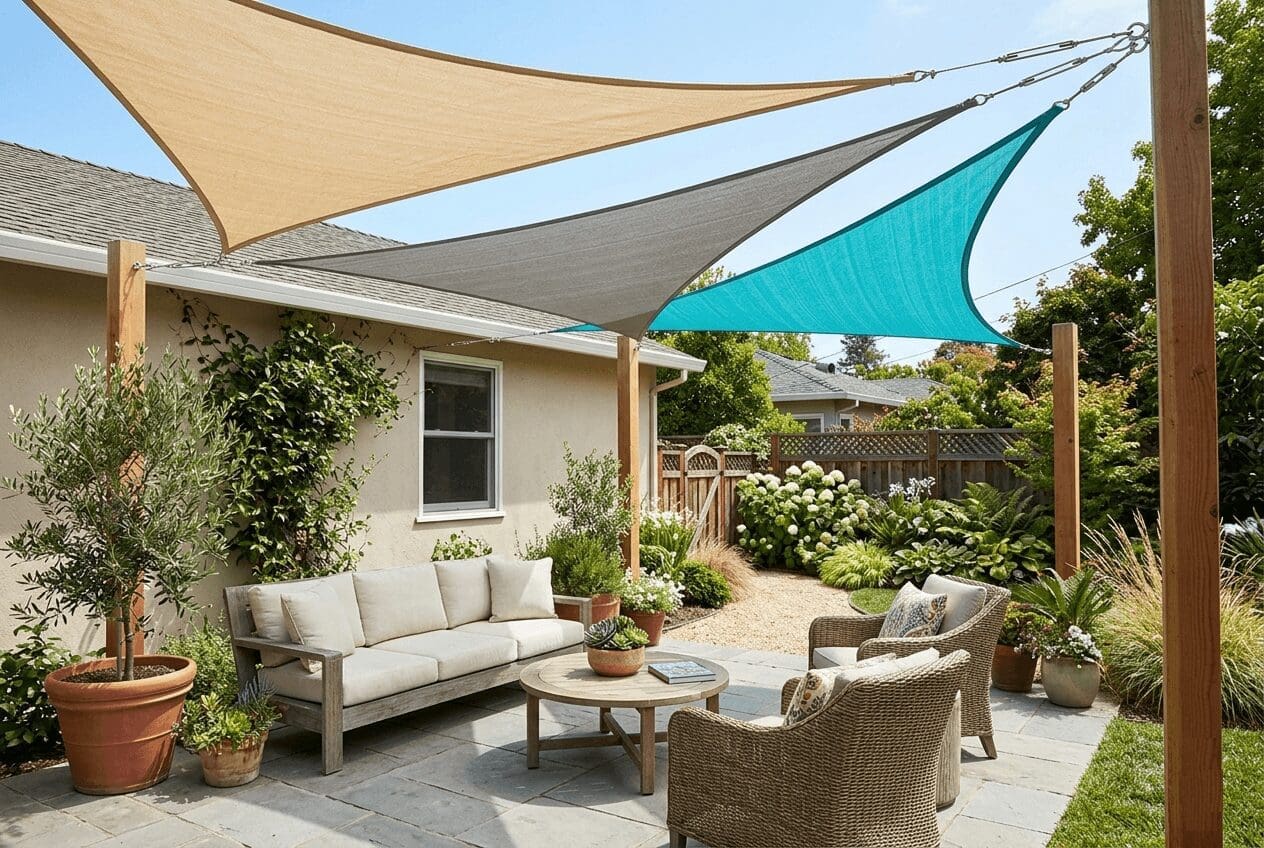
Have you ever thought of choosing something simple for your landscaping project? If you do not have the budget or space for a pergola, you can also choose shade sails. Such an alternative will be temporary. You can even invest in a pergola in the future. You can find options that are weatherproof and can also look beautiful in your outdoor space. Therefore, you can save on the overall process and create a chic look in your outdoor space.
26. Shrine-Themed Pergola:
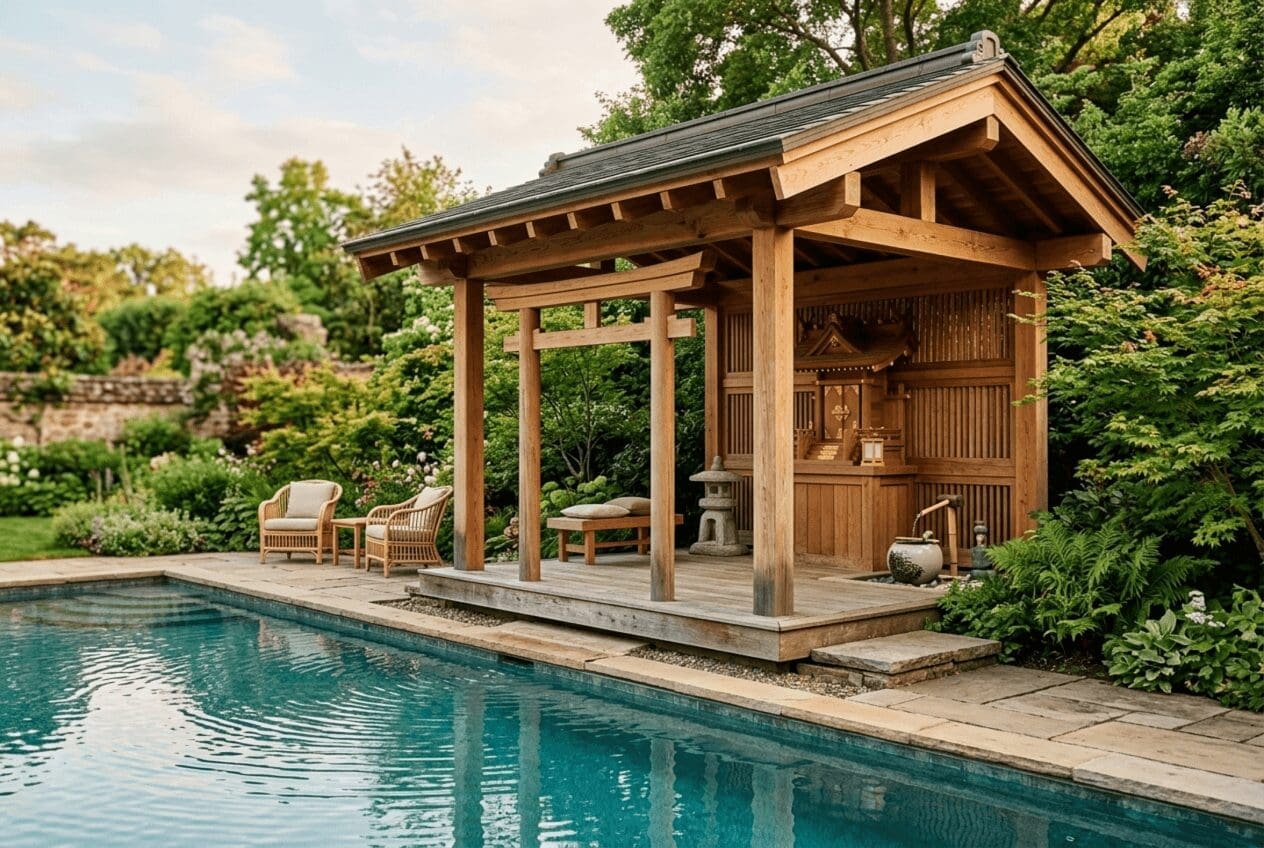
Pool decks and surroundings will always be a perfect space to install a pergola. Since a waterbody is already around and you can access the sound of rippling water, why not plan a shrine-themed pergola?
Bringing a conventional essence is easier. Choose cedar wood as it carries natural vibes without any extra effort. Use the same material for posts, rafts, beams, walls, and floors. The entire essence of the space can help you create a peaceful environment.
What are the Steps Involved in Pergola Installation?
- Planning: The first step is to plan the overall layout and mark post locations. Everything should be positioned carefully to avoid potential issues and to ensure it complements your outdoor space.
- Foundation: Ground installations may require digging holes. The posts are placed and secured with concrete to ensure structural strength.
- Framing: Once the foundation is set, assemble the top frame and raise it into position. In some cases, the structure may be wall-mounted.
- Roofing and Finishing: Next, beams are attached to the posts to create the desired shade structure. Once everything is properly secured, finishes such as paint or sealant can be applied as needed.
What are the Key Factors to Consider When Investing in a Pergola?
1. Deciding the Purpose:
Before building a pergola, determine its primary purpose. It can provide light shade, serve as a focal point, or enhance your outdoor lifestyle. Various roof options are available depending on the level of shelter you need, from open slats to more covered designs.
2. Considering Maintenance Requirements:
Think about maintenance when choosing materials. Painted metal may rust over time, while wood can rot or warp without proper care. Composite materials may offer a lower-maintenance alternative, making them a practical choice for long-term use.
3. Analyzing the Overall Costs:
A pergola can increase your property value, so it’s worth investing in experienced professionals. While DIY kits may seem cost-effective initially, they can lead to additional expenses if mistakes occur. A professionally installed pergola ensures durability and reduces the risk of costly repairs later.
4. Evaluating the Size:
Consider the size of your outdoor space when deciding on pergola dimensions. A structure that is too large may overwhelm the area, while one that is too small may not provide enough shade or usability. Proper proportions help maintain visual balance and functionality.
5. Choosing High-Quality Solutions:
Work with experienced specialists and select durable, high-quality materials. This will ensure long-lasting performance, better resistance to weather conditions, and easier maintenance over time.
6. Deciding the Placement:
The placement of your pergola plays a key role in how effective and comfortable it will be. Consider the direction of sunlight, wind patterns, and proximity to your home or garden features. Proper orientation can maximize shade during peak hours and improve overall usability.
7. Design Compatibility:
Your pergola should complement the existing style of your home and outdoor area. Coordinating colors, materials, and finishes will create a cohesive look that enhances the overall appeal of your space while blending seamlessly with the surroundings.
What are the Mistakes to Avoid When Installing a Pergola?
1. Not Paying Attention to Site Conditions:
Always assess site conditions before installation. Failing to evaluate factors like soil stability, slope, sun exposure, and wind direction can result in an uncomfortable or impractical outdoor space. A poorly chosen location may also affect the longevity and usability of the structure.
2. Ignoring Building Codes:
Be aware of local building codes and restrictions, such as height limits, property boundaries, and permit requirements. Not complying with regulations can lead to fines, delays, or even forced removal of the structure. Consulting professionals can help ensure everything meets the code requirements.
3. Choosing the Wrong Size:
The pergola should match the scale of your property and outdoor area. A structure that is too large may dominate the space, while one that is too small may not provide adequate shade or functionality. Proper measurements and planning are essential to achieve balance and usability.
4. Making Incorrect Material Selection:
Using low-quality materials can lead to early wear and tear, structural issues, and higher maintenance costs over time. Weather-resistant and durable materials are especially important for outdoor installations, as they help ensure longevity and consistent performance.
5. Poor Drainage Planning:
Drainage is a critical factor that should not be overlooked. Without proper planning, water may collect around the base of the pergola, leading to soil erosion, wood rot, or foundation damage. Incorporating proper grading and drainage solutions can prevent these issues.
6. Inefficient Installation:
Installation quality plays a major role in the durability and appearance of your pergola. DIY attempts without the right tools or expertise can result in uneven posts, weak joints, or structural instability. Hiring experienced professionals ensures precise alignment, secure connections, and a polished final result.
The Final Word:
Several structures can enhance your landscape. A pergola is one of the most special features that can make the space appear more comfortable and stunning at the same time. This helps make the space feel open and fresh yet protected. When installing a pergola in your outdoor space, make the best material and design decisions to complement your overall lifestyle.
Contact Landscape One Consulting to invest in the best landscaping elements, such as a pergola, for your space. The company will help you install a pergola that suits your property. It provides several types of services, including landscape design services, landscape consulting services, and more. So, you can achieve a landscape that matches your vision and also works well in the local environment. Their primary service areas include Brenham, College Station, Round Top, Chappell Hill, Columbus, and more.
These landscape consulting solutions are also helpful for landscaping companies. Whether you want landscape design services for a pergola, water feature, or a vertical garden addition, this company will deliver stress-free solutions for your convenience.


Recent post
Pergolas: Blending Comfort and Design (And 26 Ideas to Back it Up!)

Landscape Consulting Services: Handling the Project On and Off the Field